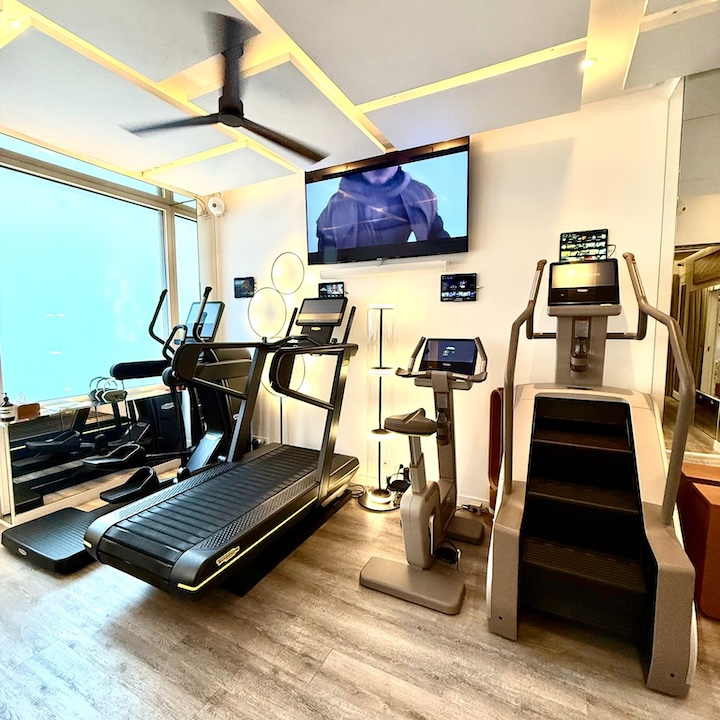
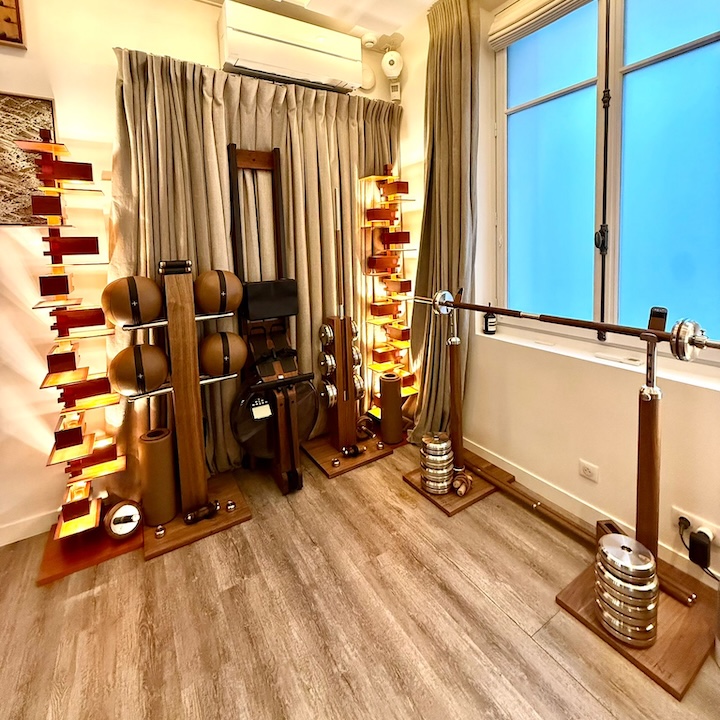
A private yoga class is a one-on-one session with an instructor, tailored to your body, your skill level, and your goals: flexibility, back health, stress relief, recovery, or athletic training. It can be held at home, at your workplace, in a studio, or via video call. Here’s what it entails, how it differs from a group class, what factors affect the price, and how to choose the right instructor.
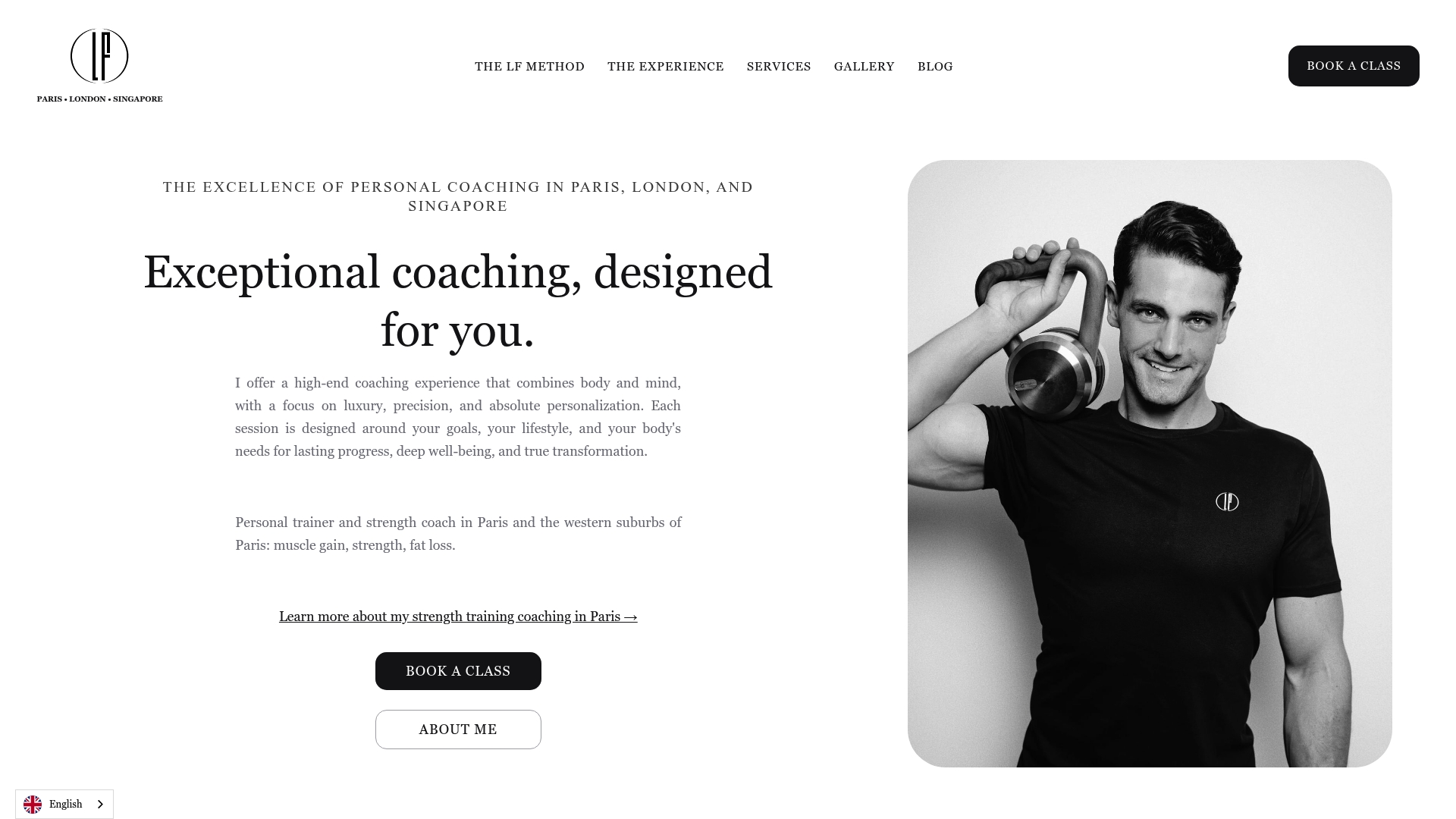
My name is Louis Fabre, and I’m a fitness coach in Paris. Yoga is one of the disciplines I incorporate into my work with clients, along with mobility training, Pilates, and strength training. What I’m describing here is based on my practical experience in the field.
In a nutshell
- A private class replaces the group’s pace with your own: the sequence, duration of the poses, variations, and breathing are tailored to you.
- A session generally lasts one hour and follows a specific sequence: centering, warm-up, preparatory poses, main pose, and integration.
- In France, there is no clearly defined legal framework for the profession of yoga instructor: training, experience, and teaching methods are verified before a reservation is made.
- At our center, personal training costs €170 per hour, and yoga is part of a comprehensive program that includes nutrition and recovery, if you’d like.
Table of Contents
- Private Lessons and Group Classes: What's Really Changing
- How the teacher tailors the session to your profile
- The Structure of an Individual Session
- At home, at work, in the studio, or via video chat
- How much does a private yoga class cost in France?
- Our Perspective: Yoga, One Component of a Comprehensive Support Program
- Our offer for training with a personal trainer
- How to Choose a Private Yoga Instructor
- Making the Most of Your First Session
- When One-on-One Lessons Are Most Effective
- Frequently Asked Questions
- Sources
Private Lessons and Group Classes: What's Really Changing
In a group class, the instructor leads a single sequence for students of varying skill levels. The instructor offers variations, but can’t watch everyone at all times. In a private class, you have the instructor’s undivided attention.
In practical terms, this changes four things:
- The sequence. The session is tailored to your specific needs for the day: a stiff back after a week of travel, tight hips from running, or a stiff neck from staring at a screen.
- Alignment. The instructor observes your postures and corrects them based on your body type, rather than aiming for an “ideal” form that’s the same for everyone.
- Adjustments. An old injury, pregnancy, stiffness, or temporary fatigue are taken into account during the session, not afterward.
- The pace. You stay longer in a pose that feels good, and you take the time to learn the one that feels challenging.
Specialized websites also promote private lessons as a way to receive personalized training, precise adjustments, and modifications in the event of an injury, which explains why progress is often faster than in general group classes.
That doesn't mean working out in a group is pointless: the atmosphere in a group is a great motivator for many people. But if you're just starting out, have a physical limitation, or have a tight schedule, one-on-one training is the most direct route.
How the teacher tailors the session to your profile
A good one-on-one class starts with a conversation. Before we move into the first pose, I want to know how you sleep, how you work, what you’re already doing, where you’re feeling pain, and what you’re specifically hoping to achieve.
The competency framework for yoga instruction, published on the France Compétences website, states that instructors should select yoga techniques based on their students’ profiles, skill levels, and needs, drawing on their knowledge of anatomy and offering variations. This is exactly what one should expect from a private instructor.
This idea of yoga that adapts to the individual is not new. The Viniyoga Foundation France describes a teaching method that can be tailored to the practitioner’s needs, health, and abilities, offering group or individual classes and a practice adapted to the rhythm of the moment.
Three real-world examples
- The leader who sleeps little. A slower session, deeper breathing, stretches for the posterior chain, and a longer final relaxation period.
- Runners or triathletes. Hip flexibility, ankle and shoulder mobility, and gentle core exercises, as a supplement to physical training.
- Someone who is getting back into it after a long break. Simple poses, short holds, learning proper form, and gradually increasing intensity.
In every case, the session isn’t set in stone: if your back is stiffer than it was during the last session, we adjust the plan on the spot. We call this “real-time adaptation,” and it’s at the heart of our method.
The Structure of an Individual Session
The most common session length is one hour. It may be shorter for a relaxation session or targeted practice, and longer for an initial assessment. The guidelines mentioned earlier describe a session structured around centering, warm-up and preparatory poses, the main pose, inversions, and integration, with adaptations based on the participants.
Here's how that breaks down over the course of an hour:
| Step | Estimated duration | What's happening there |
|---|---|---|
| Welcome and Orientation | 5 to 10 min | Discussion about how you're feeling today, breathing exercises, getting settled |
| Warm-up | 10 to 15 min | Joint Mobility, Preparatory Poses |
| Main Posture | 20 to 25 min | Gradual construction, alignment corrections, variations |
| Reversal and Return to Calm | 10 min | Recovery Poses, Relaxation |
| Integration | 5 min | Breathing, assessment, tips for practicing on your own |
These time frames are guidelines for planning, not rules: the teacher will adjust them based on your needs.
By the end, you should walk away with one or two short exercises to do on your own, lasting five to ten minutes. That’s what turns a good experience into lasting progress.

At home, at work, in the studio, or via video chat
The location changes the experience, not the principle.
- At home. No commute, a familiar setting, and a practice that fits into your routine. You’ll need a clear space about the size of a mat, plus a little extra room on the sides.
- At the office. Ideal for a 45- to 60-minute break, provided you have a quiet room available.
- In the studio. Equipment available (blocks, straps, props), a distraction-free environment, ideal for practicing more technical poses.
- Via video chat. More flexible and often less expensive, which is helpful when traveling. The instructor can’t correct your form with physical cues, so they must give very precise verbal instructions, and you need to position the camera so it shows your entire body.
If you're in Paris or Neuilly, we also offer in-home sessions: you can read about how our in-home coaching works in Neuilly-sur-Seine and Paris.
How much does a private yoga class cost in France?
There is no single rate. The price depends on several factors:
- The location. In-home lessons include the teacher's travel expenses, and rates are higher in major cities, with Paris at the top of the list.
- Level of expertise. Initial training, years of experience, specialization (therapeutic yoga, prenatal yoga, sports training).
- The format. A single session costs more per hour than a package, and video calls are often less expensive than in-person sessions.
- Duration and frequency. A package of multiple sessions generally reduces the cost per session.
- Comprehensive support. Initial assessment, follow-up between sessions, and advice on nutrition and recovery.
To compare offers accurately, consider the hourly rate, the actual duration of the session, any travel fees, and how long a package is valid. A “trial” offer is a good way to see if you get along with the instructor before committing.
Our Rates
At Louis Fabre Coaching, yoga is part of our high-quality, personalized coaching program. Our published rates are:
| Formula | Rates |
|---|---|
| Personal coaching | 170 € per hour |
| Group coaching | 200 € per hour |
| Private Coaching at Home | 250 € |
| Personalized assessment | 140 € per hour |
| Pack of 10 sessions | 1 550 € |
| Pack of 20 sessions | 3 000 € |
| Pack of 30 sessions | 4 450 € |
Details about each package can be found on our services page.
Our Perspective: Yoga, One Component of a Comprehensive Support Program
We rarely view yoga as a standalone discipline. For our clients, it addresses very specific needs: relaxing after a busy day, regaining mobility, recovering more effectively between strength training sessions, and training for a marathon without getting stiff.
That’s why we tailor each session in real time, based on the student’s level, lifestyle, and physical condition on that particular day. A one-on-one class is only valuable if the instructor is constantly observing, listening, and making adjustments.
Our approach connects the body and mind: precise physical training, personalized nutrition strategies, mental support, and recovery. Yoga fits naturally into this approach because it works on breathing, mobility, and mindfulness all at once.
After more than a decade of experience, our belief is simple: lasting progress comes from careful guidance, in a pleasant setting, with a counselor who knows your story. That’s what the one-on-one format makes possible.
Bertrand
Our offer for training with a personal trainer
If you’re looking for personalized yoga as part of a broader fitness program, we start with a personalized assessment at €140 per hour: we’ll review your current fitness level, any physical limitations, and your goals, and then we’ll create a plan tailored to your needs.
Next, choose the plan that's right for you: a one-on-one session in the studio, in-home coaching, or a session package. See all the options on our services page or learn more about our sports coaching in Paris.
How to Choose a Private Yoga Instructor
In France, according to the National Union of Yoga Teachers, the profession of yoga teacher is not subject to any clearly defined legal or regulatory framework, nor does it enjoy official recognition. This does not mean that all teachers are the same—it means that it’s up to you to ask the right questions.
Criteria to Check
- Training. Ask where and for how long the teacher was trained, and whether their training is affiliated with a federation or follows a specific curriculum. Some organizations offer certifications that teachers present as being recognized by yoga organizations around the world: this is a clue, not a guarantee.
- The experience tailored to your profile. A teacher who is used to working with athletes, older adults, or people with back issues won’t lead the same session as another teacher.
- The first consultation. He or she will ask you about your health, any injuries you have, and your goals before having you exercise.
- The session setting. The France Compétences framework calls for the preparation of an appropriate space and materials, clear instructions, and relevant verbal guidance.
- Consent. The same guidelines require explicit consent before any physical contact. If a teacher touches you without asking, that’s a warning sign you should take seriously.
- Pricing transparency. The hourly rate, actual duration, cancellation policy, and validity of packages must be clear before payment is made.
Practice Safely
Always disclose any pain, pregnancy, heart condition, high blood pressure, or recent surgery before your first session. If you have any doubts about a medical condition, consult your doctor before beginning. During the session, a posture should never cause sharp pain: mild discomfort from stretching is normal, but sharp pain is not, and you should report it immediately.

If you have persistent back pain, our article on personalized exercise as a long-term solution explains how we approach this issue.
Making the Most of Your First Session
A few habits can make getting started much easier:
- Wear comfortable clothing and wait about two hours after a heavy meal before practicing.
- Before the session, write down your three main concerns or goals.
- Set up a clear, quiet space with a non-slip mat.
- Admit what you don't know how to do: that's the teacher's starting point, not a flaw.
- Agree on a realistic schedule together. One weekly session followed by short practice sessions on your own is often more sustainable than sporadic efforts.
After two or three sessions, you should feel like the instructor knows you: they anticipate where you might be stiff, adjust the routine without you even asking, and give you guidance on how to improve.
When One-on-One Lessons Are Most Effective
This format is particularly well-suited for several situations:
- You're just starting out and want to build a solid foundation before joining a group.
- You have a physical limitation: chronic pain, a past injury, or stiffness.
- You're an athlete looking for a supplement to improve mobility and recovery.
- You have limited time and a busy schedule, especially if the teacher comes to you.
- Are you looking for a comprehensive program that includes nutrition, recovery, and mental coaching?
For athletes, yoga can be part of a broader training regimen: check out our guide to strength training coaching in Paris to see how these disciplines complement each other.
Frequently Asked Questions
Is a one-on-one yoga class suitable for beginners?
Yes, it’s actually a great place to start. The instructor teaches you proper form and breathing at your own pace, without comparing you to a group. You build a solid foundation before, if you’d like, joining a group class.
How many sessions does it take to notice results?
It depends on your starting point, how consistently you practice, and your goal. Many people feel better right from the first few sessions, but lasting progress requires a regular routine—for example, one session per week supplemented by short practice sessions on your own. No serious instructor can promise a specific result.
Can I take a private yoga class at home or via video chat?
Yes, both options are available. For in-home sessions, the instructor comes to your home and adapts the session to your space. For video sessions, the session is more flexible but relies on verbal instructions: you’ll need a well-positioned screen and a clear space.
Do you need a doctor's note to get started?
There is no general requirement for a private lesson, but the instructor must be aware of your health status. If you have a medical condition, are pregnant, or have recently had surgery, talk to your doctor first and let the instructor know before your first session.
How can you tell if a teacher is competent?
Ask about their training, their experience with people similar to you, and how they conduct an initial consultation. A good instructor will ask about your health, seek your consent before making any physical adjustments, and clearly explain their rates.
Sources
- Private Yoga Classes vs. Group Classes: Cost, Benefits
- Competency and Assessment Framework: Teaching Yoga, France Compétences
- About Us, Viniyoga Foundation France
- National Union of Yoga Teachers (SNPY)
- Yoga Alliance International France, Teachers
Recommendations