No, that's not necessary. Exercising on an empty stomach slightly increases fat utilization during exercise, but there's no evidence that it leads to greater weight loss over time. For intense exercise (heavy weight training, interval training), it's best to eat beforehand.
In a nutshell
- Light cardio in the morning: can be done on an empty stomach, with no particular risk for most healthy people.
- Weight loss: Working out on an empty stomach doesn't burn more fat over the long term. It's your daily calorie balance that matters.
- Intense exercise: Heavy weight training and interval training require readily available energy. It's best to eat beforehand.
- If in doubt: a light meal 1 to 2 hours before your workout is still the safest option.
What happens in the body when you exercise on an empty stomach?
After a night's sleep, the body's sugar stores (glycogen) are lower than after a meal. The body then draws more on fat reserves to provide energy. This has been measured in the laboratory: fat oxidation is higher during exercise on an empty stomach than during the same exercise after a meal.
Does it help you lose more weight?
Not necessarily. A literature review published in the Open Access Journal of Sports Medicine concludes that there is little evidence that training on an empty stomach increases long-term fat loss, despite the increase in fat oxidation during the workout itself. The body generally compensates for this over the rest of the day. What determines weight loss is the balance between calories consumed and calories burned over several weeks, not the timing of meals relative to the workout.
What about performance?
The results vary depending on the type of exercise. For moderate-intensity endurance exercise, the effect is often limited. For high-intensity exercise (sprints, interval training, heavy lifting), several studies report a decline in performance when exercising on an empty stomach: less energy is available, and the perceived exertion is higher. The authors of the review cited above recommend that endurance athletes avoid high-intensity training on an empty stomach, and note that an evening workout on an empty stomach may be better tolerated than a morning workout on an empty stomach.
When is it best to eat a meal before exercising?
- Weight training with heavy weights: strength and the number of repetitions depend on available energy.
- Interval training or high-intensity exercise: the risk of premature fatigue and dizziness increases when exercising on an empty stomach.
- Long workouts (more than 60–90 minutes): Energy reserves are depleted more quickly without pre-workout nutrition.
- Feeling unwell or unusually tired: a sign you shouldn't ignore, no matter what type of workout you're doing.
How can you figure out what's right for you?
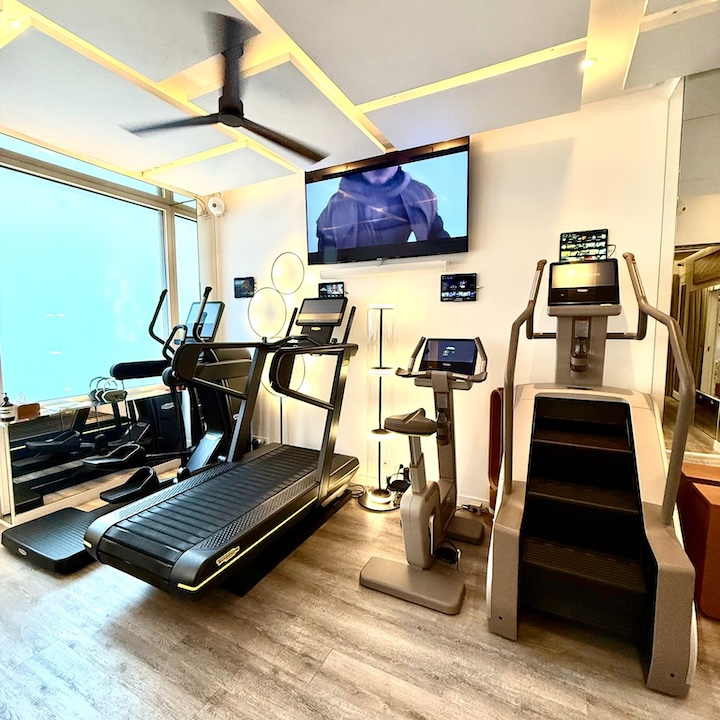
The answer varies from person to person depending on your goals, the intensity of your workout, and your individual tolerance. A consultation with a coach allows you to tailor your diet around your workouts based on your actual goals, rather than following a one-size-fits-all approach. Start with a 60-minute personalized assessment at the studio. The studio is open from 6 a.m. to 11 p.m., 7 days a week, giving you the flexibility to schedule your session around your meals. To learn more about our coaching services, visit the personal trainer in Paris page.
Frequently Asked Questions
Does intermittent fasting change the response?
The principle remains the same: when fasting, performance during intense exercise may decline. People who practice intermittent fasting often adjust the timing of their workouts to fit within their eating window so they can train at their best.
Can you lift weights on an empty stomach?
It's possible, but muscle strength and endurance are often slightly reduced. For strength training sessions with progressive loads, a light meal before the session helps maintain the quality of your form.
How long before the session should I eat?
In general, a light meal 1 to 2 hours before exercise is enough to replenish some energy without interfering with digestion during the workout.
Is it dangerous to exercise on an empty stomach?
For most healthy people engaging in moderate exercise, no. Caution is advised in cases of unusual fatigue, dizziness, or for anyone taking medication that affects blood sugar levels: in such cases, it is recommended to consult a healthcare professional before changing your habits.
Sources
- Zouhal H et al., “Exercise Training and Fasting: Current Insights,” Open Access Journal of Sports Medicine, 2020. https://www.dovepress.com/exercise-training-and-fasting-current-insights-peer-reviewed-fulltext-article-OAJSM
- World Health Organization, WHO Guidelines on Physical Activity and Sedentary Behavior, 2020. https://www.who.int/publications-detail-redirect-9789240015128
About the Author: Louis Fabre is a former tennis player (Roland Garros, NCAA Division I at Texas Tech) who holds dual master’s degrees in physical training and sports nutrition, with over 10 years of coaching experience and more than 2,000 clients.