To manage work-related stress, you need to address three areas at once: your organization (priorities, boundaries, delegation), your recovery (sleep, breathing, breaks), and your body, which is constantly under stress. The third is the most overlooked. A personalized workout routine, tailored to your pace and your level of fatigue on any given day, provides both physical relief and a regular structure. This is what we build with our clients—with executives and managers in mind—during our personal coaching sessions.
Here's how workplace stress works, how to recognize it, and what actually works in everyday life.
What Work-Related Stress Really Is
According tothe INRS, workplace stress occurs when a person feels an imbalance between what is expected of them and the resources available to them to meet those expectations. It is therefore not a matter of personality; rather, it is a discrepancy between demands and resources.
The INRS distinguishes between two situations:
- Acute stress: It is associated with a specific situation (a presentation, a deadline), and its symptoms subside shortly thereafter.
- Chronic stress: It sets in over time and always has harmful effects on health.
The goal is not to eliminate all tension, but to prevent it from becoming permanent.
The Most Common Causes
The WHO lists the following as psychosocial risks in the workplace: excessive workload, long and inflexible hours, a lack of influence over the definition of one’s tasks, authoritarian management, harassment, job insecurity, and the conflict between work and family demands.
For its part, the INRS identifies the main causes as excessive workload, poorly defined objectives, difficult relationships with supervisors or colleagues, and a lack of autonomy. The CMVRH, a division of the Ministry of Ecological Transition, adds the increasing number of demands (meetings, video conferences, emails), the need to juggle multiple tasks at once, and the feeling of working “at a frantic pace.”
This point is important to keep in mind: if your stress stems from the way things are organized, the solution also involves talking to your supervisors—it’s not just about your personal efforts.
Warning Signs You Shouldn't Ignore
According to info.gouv.fr, the signs of developing burnout fall into three categories:
- Physical symptoms: pain, palpitations, sleep disturbances, or digestive problems with no apparent medical cause.
- Psychological: unusual irritability, anxiety, and anger.
- Behavioral: withdrawal, increased consumption of alcohol, coffee, or tobacco.
Burnout syndrome is defined by the French National Authority for Health (HAS) as physical, emotional, and mental exhaustion resulting from prolonged exposure to demanding work situations. Only a healthcare professional can make this diagnosis.
If several of these symptoms persist, talk to your primary care physician or your occupational health physician. This is the right place to start, and no exercise program can replace it.
When to Talk to a Healthcare Professional
Exercise and a healthy lifestyle can help manage stress, but they are not a substitute for medical advice. According to Psycom, if you are experiencing distress at work, you can consult the occupational physician at any time; he or she can advise you on treatment and suggest adjustments to your workstation or work schedule. Your primary care physician can assess your health and prescribe a sick leave.

If you are having suicidal thoughts, call 3114, the national suicide prevention hotline—which is free and available 24 hours a day—or dial 15 or 112 in case of immediate danger, as Qare advises.
Nine Tips for Reducing Stress at Work
The official recommendations are consistent. Here are those from the CMVRH andinfo.gouv.fr, broken down into specific steps.
- Set limits on your hours and workload, and stick to them. A specific end time for the day written in your planner is better than just a vague intention.
- Prioritize. Ask your supervisor to decide between two urgent tasks rather than handling them both on your own.
- Insist on realistic deadlines when a request exceeds what is feasible.
- Saying "no" assertively: Explain what you can't do and what you suggest instead.
- Delegate whatever can be delegated.
- Break down an overwhelming task into smaller goals.
- Allow time for the unexpected: a schedule that's 100% full always runs over.
- Take regular breaks and keep your personal and professional lives separate, especially when working from home.
- Ask for help and celebrate your successes.
The Labor Code also provides for the right to disconnect, the terms of which are established by agreement or policy within companies required to negotiate on quality of life at work, as Qare points out.
Breathe, sleep, recover
When tensions rise during a meeting or before a difficult conversation, slow breathing is the simplest thing you can do: breathe in through your nose, then breathe out for longer than you breathed in; just a few cycles are enough to slow your breathing. Slow breathing and relaxation techniques can be incorporated into your daily routine without any equipment.

Sleep is the other pillar. Stress disrupts it, and a lack of sleep makes every challenge feel more overwhelming the next day. Going to bed earlier when facing difficulties is a recommendation that Qare echoes. We explore the connection between sleep, stress, and energy in our article on sleep, stress, and energy among executives.
The Body: The Lever That the Office Day Overlooks
A stressful day takes its toll on your shoulders, neck, back, and legs. Sitting for ten hours causes tension to build up—tension that your mind alone cannot relieve. Regular physical activity helps release this tension and clearly separate work time from personal time. The WHO recommends that adults engage in at least 150 minutes per week of moderate-intensity physical activity, a guideline cited by Qare.
When you have a busy schedule, these three principles work well:
- Treat the session as an appointment, just like a meeting, preferably before the day gets the better of you.
- Adjust the intensity based on how you’re feeling that day. After a short night’s sleep or a busy week, a mobility and strength-training session is more beneficial than pushing yourself to the limit.
- Work on your posture and mobility—these are especially helpful if you sit for long periods of time: check out our mobility and strengthening exercises for people who sit a lot.
To learn more about the mental benefits, our guide to improving mental well-being through exercise explains how to structure your exercise routine for the long term.
A Sample Week for a Very Busy Executive
Here is a realistic diagram that needs to be adjusted:
- Monday: Strength training, 45 to 60 min. Goal: Get back into the swing of things after the weekend.
- Wednesday: Mobility and breathing, 30 to 45 min. Goal: To relax the neck, back, and hips.
- Friday: Cardio or adapted HIIT, 45 min. Goal: To relieve the stress of the week.
- Weekend: a walk or some recreational sports. Goal: to take a break from work.
This isn't a set program: with a coach, the sequence changes based on your energy levels, how well you've slept, and your schedule.
Our Perspective
We’ve noticed that work-related stress takes root in the body before we even realize it. That’s why each session is tailored in real time to your fitness level, lifestyle, and what you bring to the session that day.
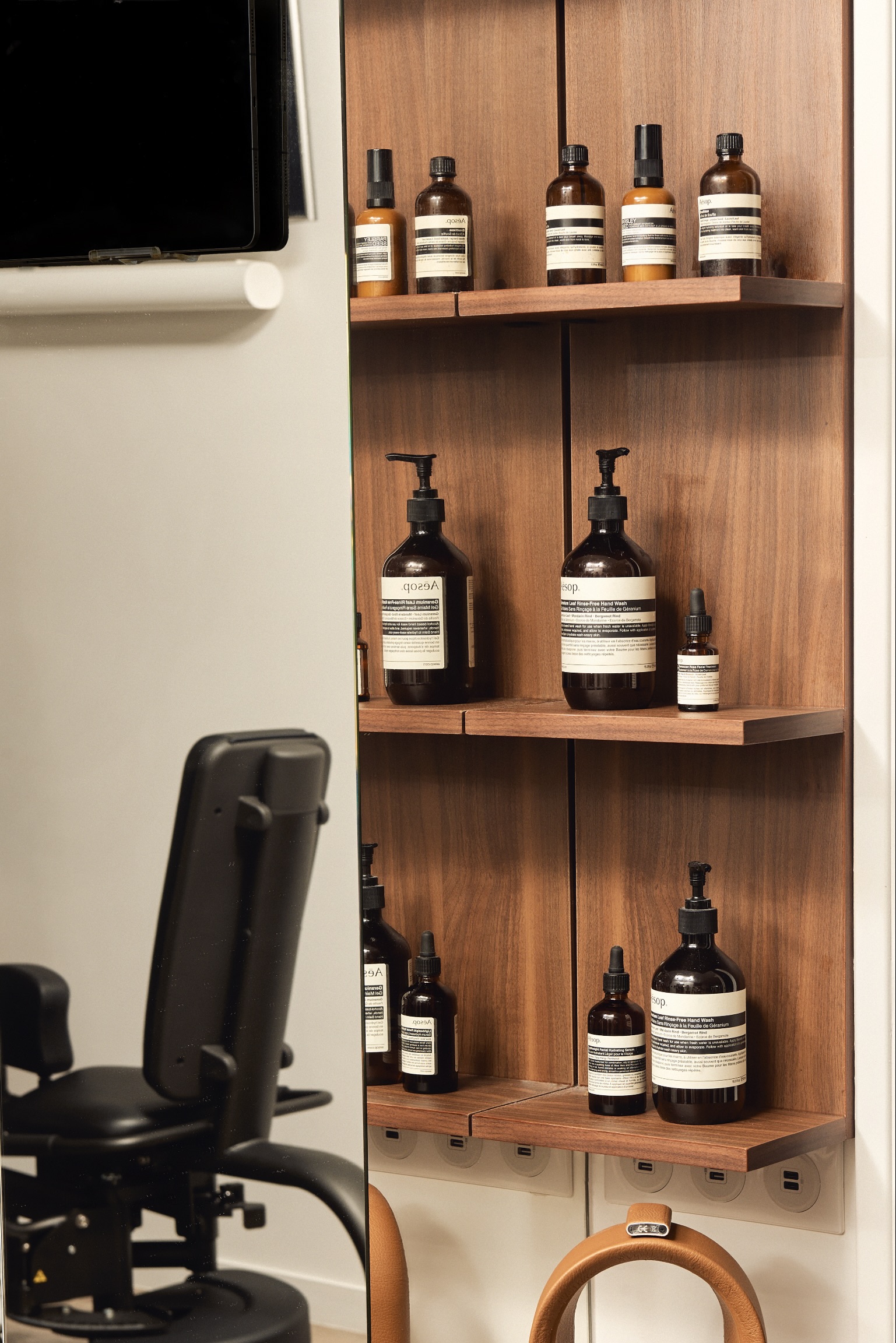
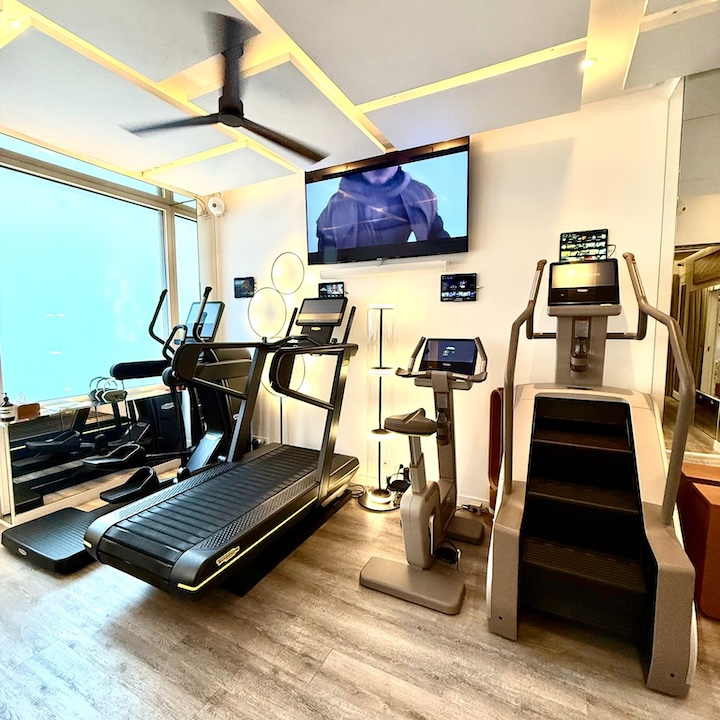
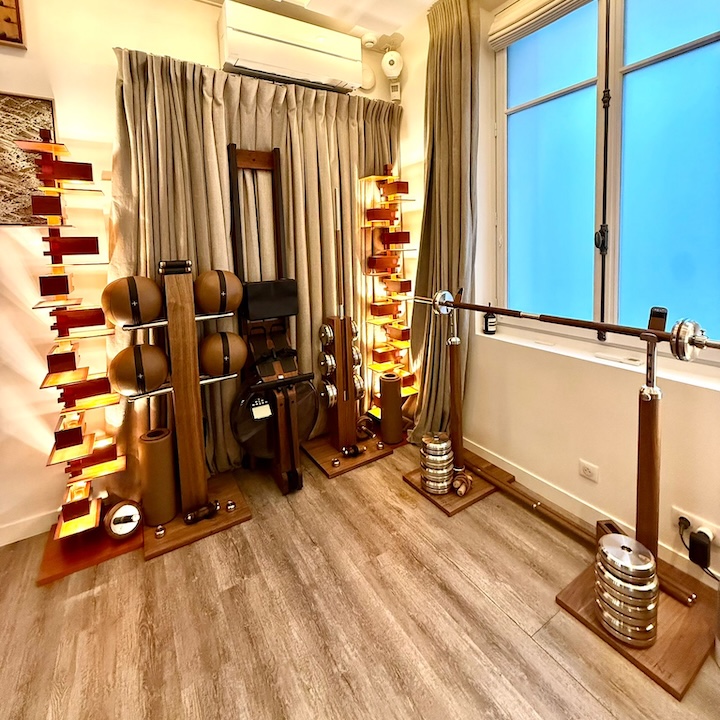
Our approach combines exercise, personalized nutrition strategies, and mental support. The setting matters, too: a stylish studio, top-of-the-line equipment, and a scheduled appointment—no improvisation—so you don’t have to worry about organizing anything.
Managing stress isn't about forcing yourself to keep going. It's about giving yourself regular time to recharge—time that's tailored to you—which makes the rest of the week more manageable.
Your Coaching Experience with Louis Fabre Coaching
If you’re looking for a regular routine to unwind and regain your energy, we offer private sports coaching and personalized fitness training in Paris, London, and Singapore. To get started with a clear understanding of your current fitness level,a personalized assessment is the best place to begin. Rates, session packages, and in-home coaching are detailed on our services page.
Sessions can be individual, in pairs, or in groups, and can be booked and paid for online.
Frequently Asked Questions
How can I manage stress at work on a daily basis?
Start by setting your boundaries: set end times, agree on priorities with your supervisors, and take actual breaks. Add slow, deep breathing when stress levels rise, ensure you get enough sleep, and engage in regular physical activity. If the symptoms persist, talk to your doctor.
What are the signs that work-related stress is becoming excessive?
Sleep disturbances, pain, or palpitations with no apparent cause, irritability, anxiety, withdrawal, or increased consumption of coffee, alcohol, or tobacco, according to info.gouv.fr. If these symptoms persist, you should see a doctor.
Does exercise help reduce stress at work?
Regular exercise helps relieve physical tension and provides a break from work. The WHO recommends at least 150 minutes per week of moderate-intensity exercise. A trainer will tailor the session to your current level of fatigue so that the workout remains restorative.
Who can I turn to if the stress becomes too much?
Your occupational health physician, whom you can consult at any time, or your primary care physician, who can issue a sick leave order.
Sources