Why Finding a Personal Trainer in Paris Has Become a Hot Topic
Ten years ago, hiring a personal trainer in Paris was limited to a very small clientele. Today, the market has exploded. Thousands of trainers offer their services in the capital—on social media, through networking platforms, at gyms, or as independent contractors.
The problem isn't finding a personal trainer anymore. It's finding the right one—the one who understands your body, respects your limitations, and delivers measurable results over time.
Because the term “personal trainer” actually covers a wide range of very different realities. A coach who’s been certified for three months and is seeing clients one after another in a park doesn’t offer the same service as an experienced professional working in a private studio with state-of-the-art equipment. Both are called “personal trainers.” The results are worlds apart.
This article gives you the tools you need to make an informed choice by explaining what really matters and what's just marketing.
What Personal Training in Paris Really Means
Personal training, in its strictest sense, is a fully personalized fitness program. This means that each session is designed specifically for you, based on your body type, your goals, your athletic and medical history, your stress levels, and your lifestyle.
This isn't just a group class in disguise. It isn't a program downloaded from an app. It's a customized workout, adjusted in real time by a professional who knows your body as well as you do.
In Paris, this definition is often blurred. Many coaches offer personal training that actually resembles semi-private coaching or standardized sessions that are repeated from one client to the next. The difference between true personal training and a generic session lies in the results, not in the sales pitch.
Key Criteria for Choosing a Personal Trainer in Paris
Training and Certifications. In France, working as a personal trainer requires a professional license issued by the DRAJES. Recognized qualifications include the BPJEPS, the DEUST in fitness professions, a bachelor’s degree in sports science (STAPS), or equivalent international certifications. Always ask to see this license. A trainer who hesitates to show it is a red flag.
Real-world experience. A degree is a starting point, not a guarantee. What makes a personal trainer great is the number of hours spent working with different body types, a variety of challenges, and complex goals. A coach who has worked with more than 2,000 clients has developed an intuition and an ability to adapt that no theoretical training can replace.
The Initial Assessment Method. A good personal trainer doesn’t make you sweat right from the first session. They assess you first. This includes a postural analysis, mobility tests, a body composition assessment, and an in-depth discussion about your lifestyle, diet, sleep habits, and past injuries. Without this assessment, any program is built on thin air.
The training environment. Where you train directly affects your results. A private studio eliminates distractions, ensures immediate access to equipment, and creates a setting conducive to focus and progress. In a public gym, even with an excellent coach, you’re subject to noise, wait times, and a lack of privacy.
The ability to adapt in real time. Your body isn’t the same every day. A quality personal trainer adjusts the session based on how you’re feeling at the moment. Whether you didn’t sleep well, are stressed about a work deadline, or have a flight the next day—the session should adapt to you, not force you into a rigid program.
The Most Common Mistakes When Choosing a Personal Trainer
Don't choose a coach based on their physique. A coach with visible abs isn't necessarily a good teacher. Their ability to transform your body has nothing to do with the appearance of their own. Look for proof of results from their clients, not on their Instagram account.
Relying solely on price. The lowest price often hides a minimal level of service. And the highest price isn’t always justified. What matters is the balance between price and the value provided: quality of care, environment, equipment, recovery protocol, and nutritional guidance.
Ignoring the relational aspect. You’ll be spending hours with this person. If you don’t click, if communication is unclear, or if you don’t feel heard, the results will suffer. The coach-client relationship is based on mutual trust.
Don't ask for an initial assessment session. Any reputable personal trainer offers an initial assessment before starting a program. If a coach immediately offers you a package of 20 sessions without assessing you first, it means they're selling a product, not a personalized service.
Personal trainer at home, at the gym, or in a private studio
At home. This is convenient if you have the space and equipment. But the reality is often different: a living room that’s too small, a yoga mat, and a few dumbbells significantly limit the exercises you can do. Working out at home also makes it harder to mentally separate your personal life from your physical workout.
At the gym. Access to equipment is a perk. But sharing the space with other members leads to interruptions, waiting, and a loss of privacy. For an executive or someone who values their privacy, the experience can be frustrating.
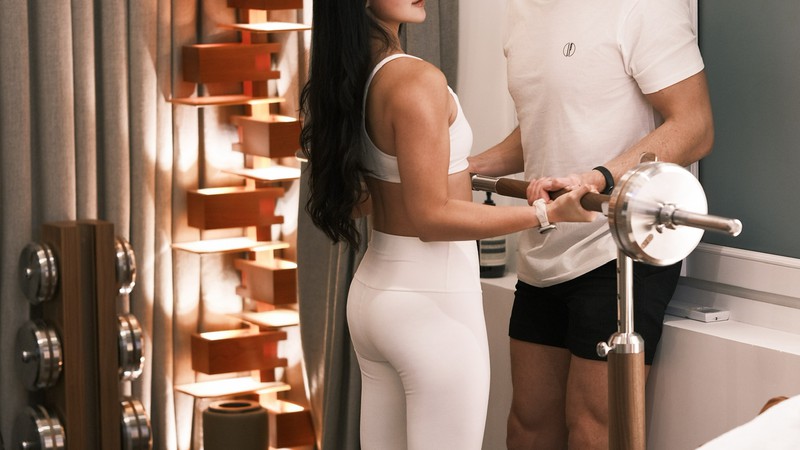
In a private studio. This setting offers the best conditions for high-quality personal training. The space is reserved entirely for you. The equipment is carefully selected. The atmosphere is designed to promote focus. Every minute of your session is productive.
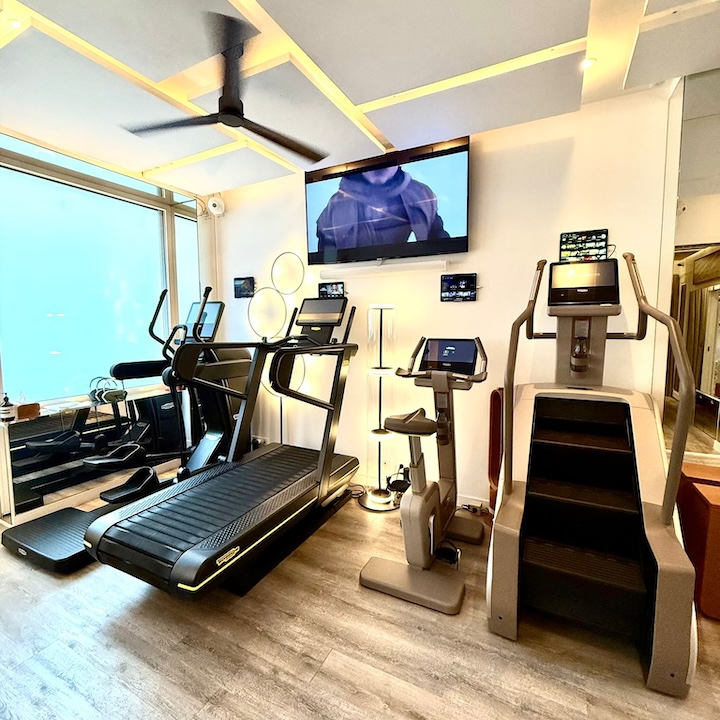
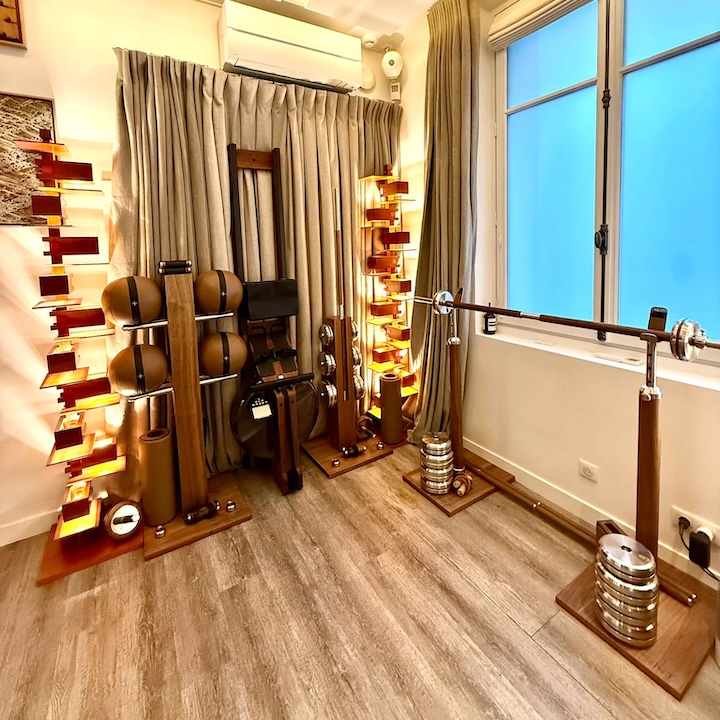
At Louis Fabre Coaching, the private studio in Neuilly-sur-Seine embodies this philosophy. Equipped exclusively with Technogym Artis Luxury and Pent Fitness equipment and located 5 minutes from the Pont de Neuilly metro station (Line 1), it offers an environment where technical excellence meets absolute comfort.
What Sets Premium Personal Training Apart from Standard Coaching
The difference lies not in the price, but in the depth of the service.
Standard coaching provides you with a program and counts your repetitions. Premium personal training integrates your workout into a holistic approach: personalized nutrition guidance, structured recovery protocols (assisted stretching, Theragun massage), real-time heart rate monitoring, and ongoing program adjustments based on your progress and lifestyle.
It’s also a matter of customer experience. At Louis Fabre Coaching, every session ends with a comprehensive recovery routine. A post-workout snack is provided: 100% natural protein bars, fresh fruit, skyr, detox juice, coffee, or tea. A private locker room with a shower is available. You’ll leave feeling revitalized, not just tired.
This attention to detail is not merely superficial. It contributes to consistency, satisfaction, and, therefore, long-term results.
The Ideal Personal Trainer Profile for a Parisian Executive
If you are an executive, entrepreneur, or business leader in Paris, your personal trainer must meet specific requirements.
Complete flexibility with scheduling. Your schedule is constantly changing. The coach must be able to adapt seamlessly, including for sessions early in the morning or late in the day.
Understanding the corporate lifestyle. Frequent travel, business lunches, the stress of decision-making, jet lag: your coach must incorporate these realities into your program, not ignore them.
Bilingual communication. For expatriates and international professionals, coaching in both French and English is a major asset. It enables precise communication about physical sensations, goals, and necessary adjustments.
Discretion and privacy. Some clients prefer not to run into other people while they’re working out. A private studio naturally ensures this privacy.
How to Evaluate Your Personal Trainer's Results
A good personal trainer delivers measurable results. Not promises—data.
After four to six weeks of regular training, you should notice tangible changes: improvements in body composition (measured, not estimated by eye), increased strength in the major movements, better sleep quality, reduced chronic pain, and increased energy in your daily life.
If, after two months, you see no progress, it is either because the program is not suitable or because the follow-up is not thorough enough. In either case, it is reasonable to reconsider the partnership.
The best personal trainers track your progress. They compare your performance from month to month, adjust the weights, modify the exercises, and explain why. This transparency is a sign of a professional who takes ownership of their results.
Why Louis Fabre Coaching Is the Leading Name in Personal Training in Paris
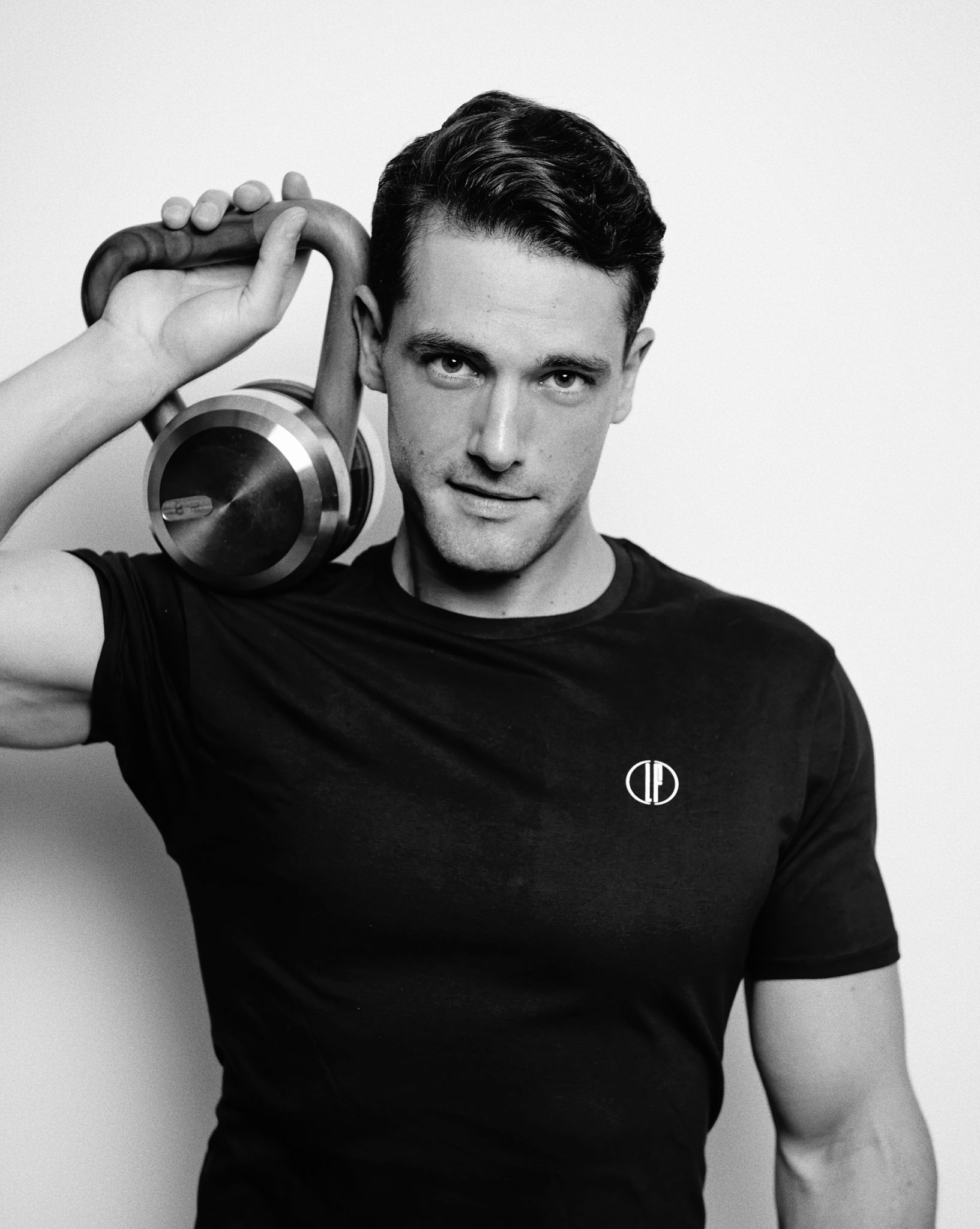
Louis Fabre has built his reputation on more than 10 years of premium coaching and over 2,000 clients he has worked with in Paris, London, and Singapore. His method is based on three inseparable pillars: precision physical training, integrated nutritional guidance, and recovery optimization.
His private studio in Neuilly-sur-Seine offers an exclusive setting, equipped with the best equipment available on the market. Each client receives undivided attention in an environment designed for performance and well-being.
Louis works in both French and English, making him the ideal personal trainer for Paris’s international community. His approach is direct, analytical, and focused on tangible results.
Ready to experience what personal training should really be like? Book your first session and discover an approach that puts your results at the center of every decision.