Private Gym or Boutique Studio in Paris: Which One Is Right for You?
Paris has never offered so many options for people who take their fitness seriously. From stylish boutique studios offering signature group classes to ultra-private studios designed to accommodate just one client at a time, the city’s fitness landscape has changed dramatically. But more choice raises a more important question: Which environment will actually deliver the results you’re looking for?
It's not a matter of good versus bad. Both models exist for good reasons, and each meets different needs. The real issue is whether they're a good fit: Does the environment in which you train align with your goals, your lifestyle, and the level of attention your body needs?
Let's take an honest look at this.
What Defines a Boutique Studio?
Boutique studios have become a defining feature of the Parisian fitness scene over the past decade. They are typically small-scale spaces offering carefully curated group classes—cycling, HIIT, Pilates, barre, yoga, boxing—with an emphasis on atmosphere, community, and brand identity. They thrive on energy. The music is carefully curated, the lighting is thoughtfully designed, the instructors are charismatic, and the experience is crafted to feel like an event.
The appeal is real. Walking into a packed class with an upbeat soundtrack and an energetic instructor can be truly motivating. For people who draw energy from group settings—who need an external push to push themselves during a session—boutique studios can be an excellent catalyst. They lower the barrier to consistency. When a class feels like a social occasion, it becomes easier to show up.
The business model also works in the customer's favor in some ways. Class passes and memberships are generally more affordable than private coaching, making boutique studios a viable entry point for people who are new to fitness or who are looking for variety without a significant financial commitment.
The Limitations of Boutique Studios
The limitations of boutique studios are structural, not philosophical. A class designed for fifteen to thirty people simply cannot take individual differences into account. No matter how skilled the instructor may be, they cannot monitor your form with the same precision as if you were the only person in the room. They cannot adjust the load, the pace, or the choice of exercises based on how your body responds in real time.
This matters more than most people realize. Two people performing the same movement can achieve entirely different results—or face entirely different risks—depending on their anatomy, injury history, and current physical condition. In a group setting, the program is optimized for the average participant, not for you specifically.
There’s also the issue of progression. Boutique classes are generally designed as standalone experiences. Each session stands on its own, which is ideal for variety but problematic for structured development. True physical transformation—whether it involves fat loss, muscle gain, post-injury rehabilitation, or athletic performance—requires progressive programming. It requires a plan that builds week by week, with precise adjustments based on measurable data. This is inherently difficult to achieve in a no-commitment class format.
Finally, there is the issue of recovery and risk. High-energy group classes often prioritize intensity at the expense of individualized attention. The pace is dictated by the group, and the social pressure to keep up can push individuals beyond what their bodies are ready to handle. This is a common cause of overuse injuries, particularly among clients who string together several intense sessions per week without adequate recovery protocols.
What Defines a Private Room Experience?
A private studio operates on a fundamentally different principle. The space is reserved for only one client at a time. There are no class schedules, no group dynamics, and no shared equipment. Every element—from the programming to the environment—is designed around the individual.
At a private facility like Louis Fabre Coaching, a session begins long before the first exercise. It starts with a comprehensive assessment: postural analysis, mobility screening, body composition measurement, and an honest conversation about goals, limitations, and lifestyle. Based on this foundation, a fully personalized training program is designed—not a template, not a generic plan, but a dynamic system that evolves as the client evolves.
During each session, every variable is monitored. Heart rate is tracked in real time. Posture is corrected with every repetition. Load and volume are adjusted based on how the body is responding that day—not based on last week, not in theory, but right then and there. If the client arrives stressed and sleep-deprived, the session is adapted. If they’re recovering from travel, the intensity is calibrated accordingly. This level of responsiveness is simply impossible in a group setting.
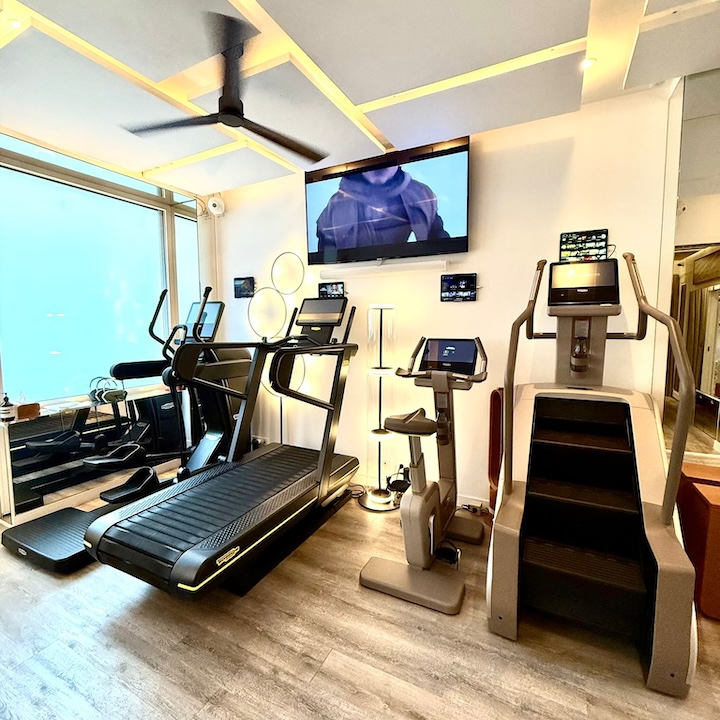
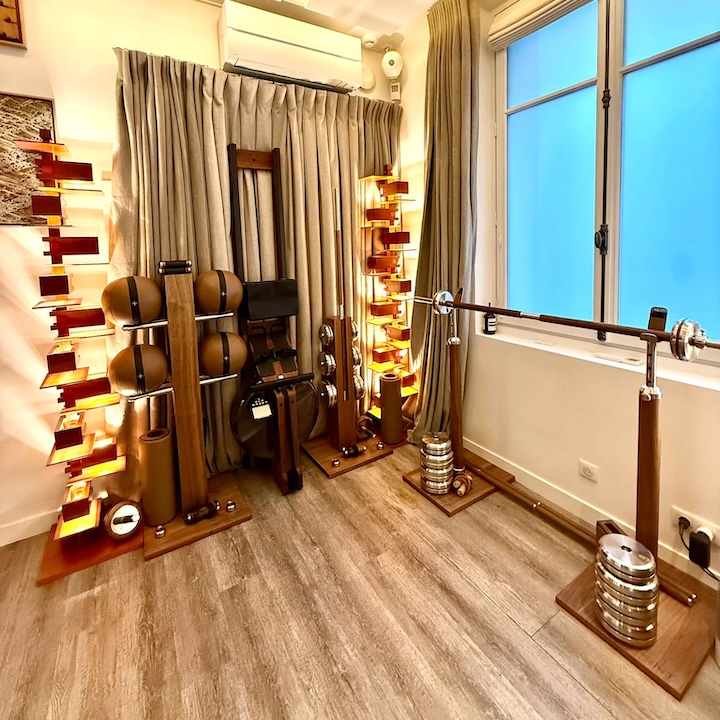
The equipment in a private studio is also selected differently. Rather than rows of machines designed for high volume and variety, a private studio is equipped with precision tools chosen for their effectiveness. At Louis Fabre Coaching, the gym features state-of-the-art equipment—chosen not solely for its aesthetics, but for its biomechanical precision and durability. Each piece of equipment serves a specific purpose within the client’s program.
Intimacy as a Performance Multiplier
Privacy is often portrayed as a luxury. In reality, it’s a performance factor. Training in a space where no one is watching—where there’s no social pressure, no comparison, and no embarrassment—allows clients to focus entirely on the workout. This is particularly relevant for executives, public figures, and high-profile individuals who spend their professional lives under the scrutiny of others. The private room becomes a space where they can be fully present, fully honest about their limitations, and fully engaged in the process, free from outside distractions.
It also enables a different kind of coaching relationship. In a private setting, the conversation between the coach and the client is continuous and unfiltered. The coach can ask about sleep quality, stress levels, eating habits, and emotional well-being without the constraints of a group setting. This depth of communication is what allows for a truly personalized program—and that’s what sets meaningful results apart from generic fitness programs.
The Financial Issue
Private coaching represents a greater financial investment than boutique class passes. That’s undeniable. But the comparison is misleading if it stops at the price per session. The relevant metric is return on investment—in terms of results, time efficiency, injury prevention, and long-term health benefits.
A client who trains three times a week in a private studio with a certified trainer will almost certainly achieve faster and more lasting results than someone who takes five group classes a week without a personalized program. The private client’s program is designed for efficiency: every minute of the session has a purpose, every exercise is chosen for a specific reason, and no time is wasted on movements that don’t serve the client’s goals.
There is also the cost of not investing in quality. Injuries caused by poor posture or overtraining in a group setting come at a price—in medical expenses, lost training time, and a reduced quality of life. Prevention, in this context, isn't just better medicine. It's better economics.
Who Should Choose a Boutique Studio?
Boutique studios are ideal for people who are drawn to the community and group energy. If you thrive in social settings, enjoy the routine of a scheduled class, and your main goal is to maintain overall fitness rather than achieve a specific physical transformation, a well-managed boutique studio can be a valuable addition to your routine.
They’re also ideal for people who are exploring different types of workouts. Trying a spin class one day and a yoga session the next is a great way to discover what resonates with your body and your preferences. For beginners, the structure and accessibility of boutique classes offer a comfortable starting point.
Who Should Choose a Private Room?
A private training session is the right choice for people who want precision, accountability, and measurable, progressive results. This includes executives and entrepreneurs who need an effective training program that delivers maximum results in a minimum amount of time. It includes people recovering from an injury who require careful, expert-guided rehabilitation. It includes anyone with specific body composition goals—gaining muscle, losing fat, or both—and who understands that these results require a personalized training program.
It’s also the ideal setting for anyone who values privacy. For clients who prefer not to train in public spaces, who want complete control over their environment, and who view their training as a private investment in their performance and longevity, a private studio isn’t a luxury. It’s the logical choice.
The Louis Fabre Coaching Approach
At Louis Fabre Coaching, the private training experience is based on a simple principle: every detail matters. From the initial assessment to the post-session recovery protocol, every aspect of the experience is designed to support the client’s specific goals. Sessions include real-time heart rate monitoring, personalized nutritional guidance, professional stretching with Theragun recovery, and access to a facility maintained to the highest standards of cleanliness and comfort.
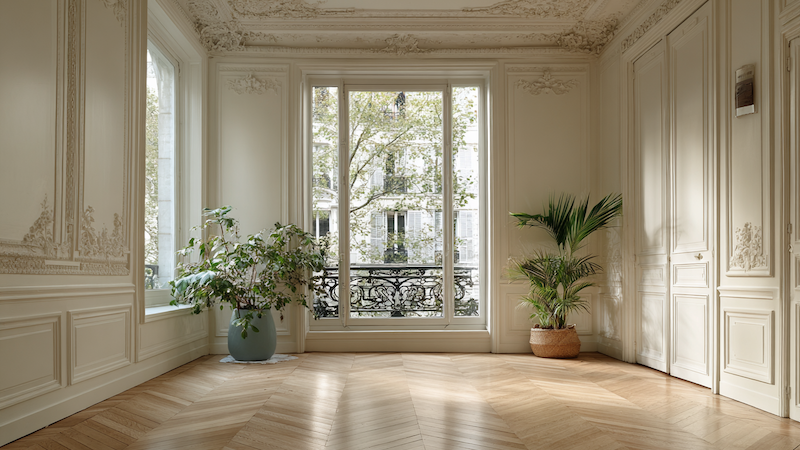
Located just five minutes from the Pont de Neuilly metro station on Line 1, the studio is both easily accessible and completely private. Each client trains alone in a space reserved exclusively for them for the duration of the session. No distractions, no compromises, and no generic workout programs.
The result is more than just a single session. It’s a system—a partnership between the coach and the client that evolves over time and produces results that no course, no matter how well designed, can replicate.
Making Your Decision
The choice between a private gym and a boutique studio isn’t a matter of status or budget. It’s a matter of clarity. What do you really want from your workout? If the answer is community, variety, and an accessible workout, boutique studios meet that need. If the answer is precision, privacy, measurable progress, and a coach who knows your body as well as you do, a private gym is where you need to be.
Both approaches can coexist. Some clients train on their own two or three times a week and supplement that with a yoga or cycling class on their recovery days. There’s no rule that says you have to choose one exclusively. But when it comes to the core of your training—the work that produces real, lasting change—the environment you choose matters more than you might think.
Choose the one that matches your goals.