A personal trainer is the right choice if you lack technique, consistency, or the time to put together an effective workout plan. A gym membership is enough if you already know how to work out on your own and can stay motivated over the long term. The real deciding factor isn't the price—it's how independently you can handle your workouts.
In a nutshell
- Whether you're just starting out or getting back into it after a long break, a coach can help you avoid technical mistakes and injuries.
- You're short on time: a coach structures each session, so you don't have to plan anything.
- You are independent and motivated: a gym with open access may be sufficient, provided you follow a written program.
- You've already tried on your own without success: the problem is often consistency, not willpower. Having someone to guide you addresses this directly.
What's the real difference between a personal trainer and a gym?
In a self-guided workout room, you choose your exercises, your weight, and your pace. There’s no pressure to make consistent progress from one week to the next. With a trainer, someone else makes those decisions for you: they adjust the weight, correct your form in real time, and tailor the program to your recovery. So the difference isn’t the equipment—it’s having an outside perspective at every session.
Who can benefit most from a personal trainer?
A coach makes the biggest difference for three groups: beginners, who can avoid developing bad habits from the start; people returning to exercise after an injury or a long break, for whom technique takes precedence over intensity; and people with busy schedules, for whom each session must be efficient without any downtime. A study of supervised trainees showed a more marked increase in the weights lifted, maximum strength, and power compared to unsupervised trainees over a comparable period.
For whom is a self-guided gym sufficient?
If you already have a solid technical foundation, know how to structure your workouts over several weeks, and are making progress on your own without losing consistency, working independently may be enough. The key consideration isn’t motivation during the first month, but rather consistency over the long term: in a study on behavioral change related to physical activity, weekly follow-ups with a coach helped a large majority of participants advance by at least one level of motivation over ten weeks—an effect that is harder to achieve through self-directed training alone.
What if you can't decide between the two?
There is a middle ground: start out with a coach while you learn the technique and develop a program, then switch to working on your own once you’ve established a solid foundation. This is the most sensible option when budget is a long-term constraint, provided you seek guidance again if your progress stalls or you experience pain.
Is a private studio different from a traditional gym?
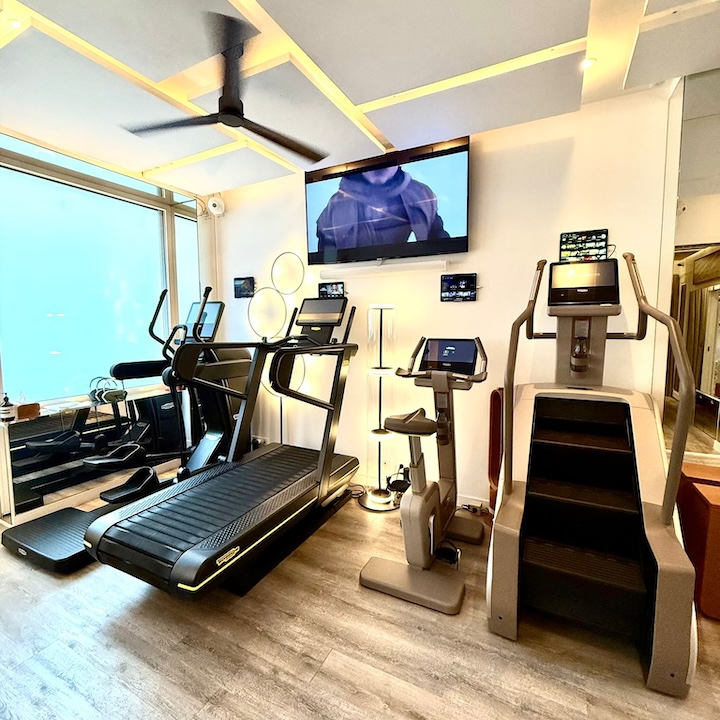
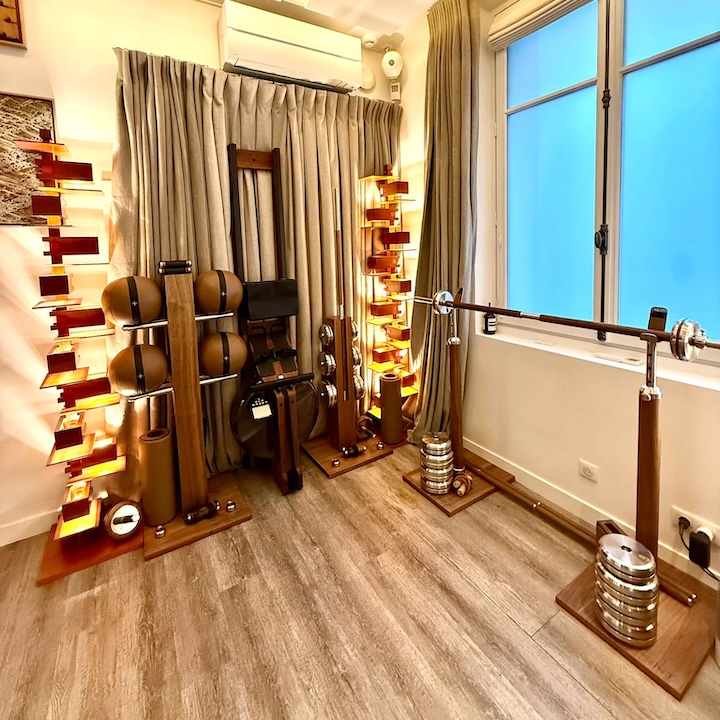
Yes, and that’s a separate issue: once you’ve decided to work with a trainer, you still need to choose a location. Our comparison of private gyms and boutique studios in Paris details the differences in privacy, personalized attention, and equipment between these two types of facilities.
How do I get started?
To find out which format is right for you, start with a 60-minute personalized assessment: goals, fitness level, and availability. This assessment serves as a foundation, whether you then choose comprehensive coaching or a self-guided program. To learn more about one-on-one fitness coaching in Paris, visit the “Personal Trainer in Paris” page or the “Services” page to see the available options.
Frequently Asked Questions
Is a personal trainer helpful if I already have some experience?
Yes, especially to break through a plateau in progress or correct long-standing imbalances. Experience doesn't always replace an outside perspective.
Is it possible to alternate between working with a coach and working independently?
Yes. Many practitioners practice regularly during the first few months, then reduce the frequency once they’ve mastered the basics—for example, switching from one guided session to several independent sessions.
Is working out on your own at the gym risky for beginners?
The main risk isn't immediate injury but rather poor technique repeated over months, or giving up because of a lack of visible results. Working with a coach, even for a short time, reduces both of these risks.
How long do you need to be under supervision before you can work independently?
There is no set duration: it depends on your starting level and your goal. Our article on the number of sessions per week with a coach provides guidelines based on your situation.
Sources
- Mazzetti SA et al., “The Influence of Direct Supervision of Resistance Training on Strength Performance,” *Medicine & Science in Sports & Exercise*, 2000. https://www.acefitness.org/certifiednewsarticle/2136/personal-training-and-fitness-coaching-do-they-really-work/
- McClaran SR, “The Effectiveness of Personal Training on Changing Attitudes Toward Physical Activity,” Journal of Sports Science & Medicine, 2003. https://www.acefitness.org/certifiednewsarticle/2136/personal-training-and-fitness-coaching-do-they-really-work/
About the Author: Louis Fabre is a former tennis player (Roland Garros, NCAA Division I at Texas Tech) who holds dual master’s degrees in physical training and sports nutrition, with over 10 years of coaching experience and more than 2,000 clients.