Yes, three workouts a week are enough to build muscle, even with a busy schedule. The key isn't the number of workouts, but their consistency and structure: full-body workouts spread out over the week.
In a nutshell
- Frequency: 3 sessions per week, full-body (working the entire body during each session).
- Weekly volume: Aim for about 10 sets per muscle group per week to make progress.
- The minimum: each major muscle group should be worked out at least twice a week.
- The real key: Consistency matters more than a perfect workout plan.
Why are 3 sessions enough to make progress?
The new recommendations from the American College of Sports Medicine (2026)—the first updates in 17 years—emphasize a simple principle: training each major muscle group at least twice a week is more important than following a complex program. For muscle gain, the ACSM recommends aiming for about 10 sets per week per muscle group. Spread out over three full workouts, these sets can easily fit into a busy schedule.
How should you plan your three sessions?
The simplest approach for a busy schedule: 3 “full-body” workouts that target the entire body each time, rather than a program that isolates one muscle group per day. The immediate benefit: if you skip a workout one week, the program remains balanced, since each muscle group is targeted again in the next session anyway.
- For each workout: 1 to 2 multi-joint exercises (squats, bench press, rows), followed by a few supplementary exercises.
- Between workouts: at least one day of recovery for the same muscle group.
- Over time: Gradually increase the weight or the number of repetitions, session by session.
Do you really have to go to a movie theater?
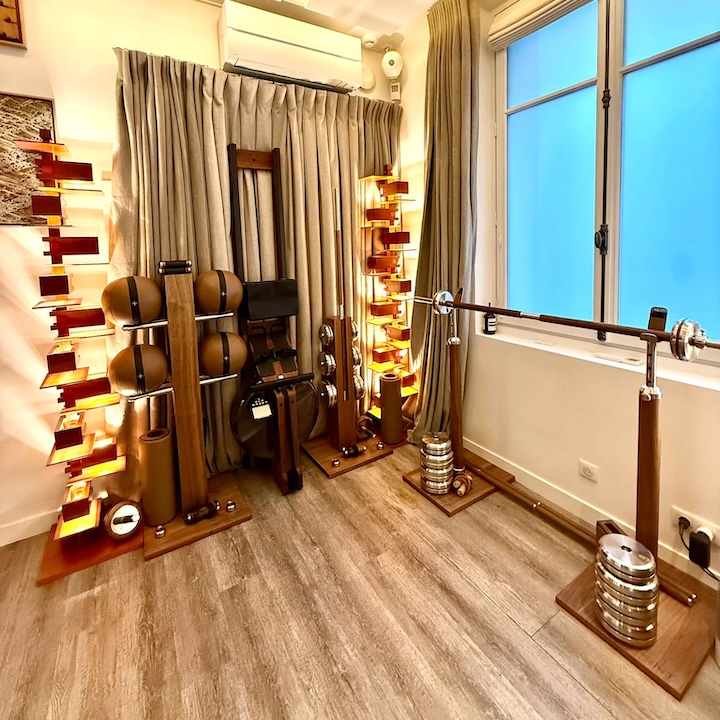
No. What matters most is the load and how it increases over time, not the location. A program using dumbbells, resistance bands, or bodyweight exercises can be sufficient as long as the load increases gradually. According to the ACSM, what matters most is a program that you can stick with over the long term, rather than a program that’s theoretically perfect but that you give up on after three weeks.
And what about diet in all of this?
Workout alone isn't enough: protein intake supports muscle growth. General guidelines range from 1.2 to 1.6 grams of protein per kilogram of body weight per day for people who do strength training, to be spread out over meals throughout the day. An article on protein needs based on your fitness goals is coming soon to the blog.
How can you keep up this pace with such a busy schedule?
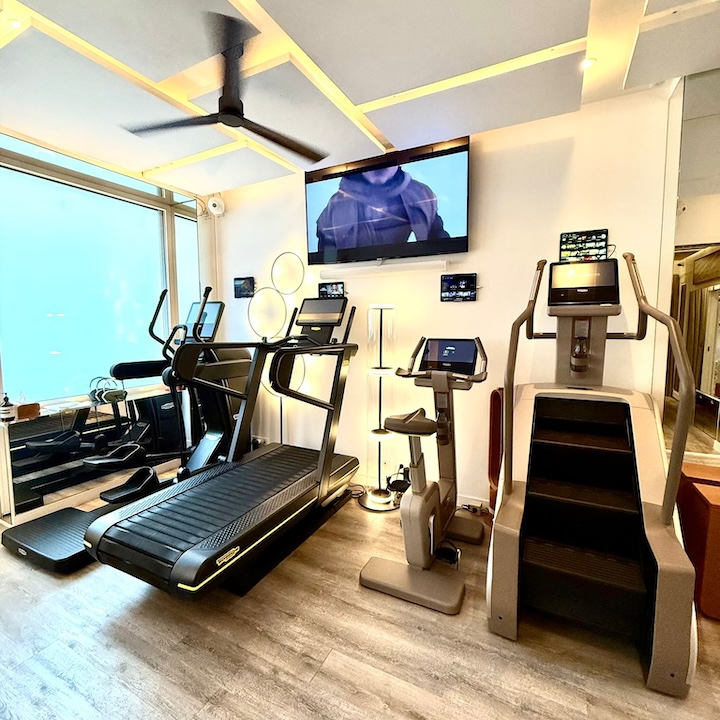
It’s better to do three 45-minute sessions each week than to follow a five-session program that you give up on after a month. Setting aside recurring time slots—just like a business meeting—helps you stay consistent. The studio is open from 6 a.m. to 11 p.m., seven days a week, which gives you time before or after a workday.
How long will it take to see results?
The first few weeks are mainly about building strength and improving technique. Visible changes in muscle mass usually take several months of regular training. Patience and consistency are more important than the intensity of a single workout.
How do I get started?
A personalized 60-minute assessment helps us create a program tailored to your fitness level and schedule. Our article on the number of weekly sessions with a coach and our guide to strength training coaches in Paris provide additional guidance.
Frequently Asked Questions
Are 3 sessions a week enough for a beginner?
Yes. To start, three full workouts per week are more than enough, provided you use proper form and gradually increase the weight.
Should you do extra cardio?
It isn't necessary for building muscle, but endurance exercise is still recommended for cardiovascular health, in addition to strength training.
How long does a session like this last?
A full and effective workout takes between 45 minutes and 1 hour, as long as you stay focused on the main exercises.
Is it possible to build muscle after age 40 at this pace?
Yes, the principle remains the same. Recovery sometimes requires a little more attention, but three sessions a week are still effective.
Sources
- American College of Sports Medicine, Resistance Training Guidelines Update 2026. https://acsm.org/resistance-training-guidelines-update-2026/
- Cleveland Clinic, " How Much Protein Should I Eat a Day? " https://health.clevelandclinic.org/how-much-protein-you-need
About the Author: Louis Fabre is a former tennis player (Roland Garros, NCAA Division I at Texas Tech) who holds dual master’s degrees in physical training and sports nutrition, with over 10 years of coaching experience and more than 2,000 clients.