A body composition assessment measures what your body is made of: body fat, lean body mass (including muscle), and water. It helps establish a baseline, track your progress beyond just the number on the scale, and adjust your workout routine. It’s done at the start of a program and then repeated at regular intervals, under the same conditions.
In a nutshell
- What it measures: the breakdown between body fat, lean body mass, and water—not just weight.
- What it's for: establishing a starting point, tracking progress, and adjusting the program.
- Its limitation: a single figure remains an approximation. The trend over time is more important than the value on any given day.
- When to do it: at the beginning, and then every 3 months at the studio, using the same camera and under the same conditions.
- Please note: This is not a medical examination and is not a substitute for medical advice.
What is a body composition assessment?
Total weight does not reveal what is changing in the body. Two people of the same height and weight can have very different body compositions. A body composition analysis breaks down weight into major components: fat mass, lean mass (muscles, bones, organs), and water.
It's helpful when you're working out. Your weight can stay the same while your body fat decreases and your muscle mass increases. Without tracking your progress, you won't notice it.
Why Isn't BMI Enough?
Body Mass Index (BMI) is calculated using weight and height: weight in kilograms divided by height in meters squared. The World Health Organization (WHO) defines a BMI of 25 or higher as overweight and a BMI of 30 or higher as obese. It also describes BMI as an indirect indicator of body composition and notes that other measurements, such as waist circumference, can aid in diagnosis.
The limitation is simple: BMI only takes weight and height into account. It cannot distinguish between fat and muscle. A body composition analysis provides this information.
How does the measurement work?
There are several methods. DXA is an imaging technique used primarily in medical settings and research. Bioimpedance involves passing a very weak electrical current through the body; it is simpler and more widely used, even in smart scales.
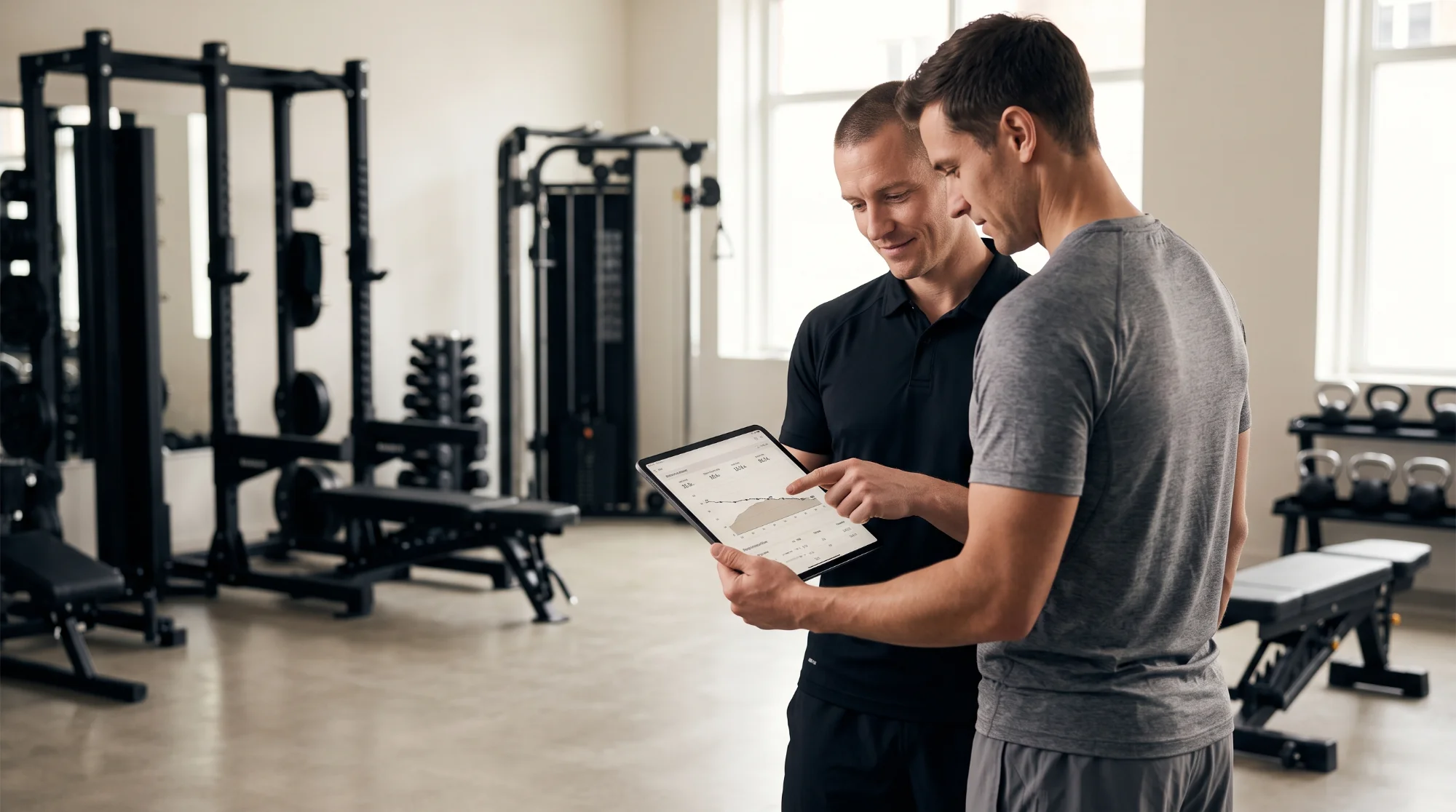
At the studio, measurements are taken using a professional bioimpedance analyzer, the Biody Xpert ZM 3. It is a multi-frequency bioimpedance device. According to the manufacturer, it analyzes 54 frequencies between 1 and 1,000 kHz in about one minute, using electrodes placed on the hands and feet. It provides measurements of body fat, skeletal muscle mass, total body water, the balance between extracellular and intracellular water, and basal metabolic rate.
This analysis is part of the 60-minute personalized assessment, which also includes an interview and a posture evaluation.
Is a body composition assessment reliable?
It provides a good overall picture, but not an exact value. A study published in PLOS ONE compared DXA and bioimpedance across 3,655 measurements. The two methods agree on body fat mass, but the authors conclude that the agreement between them is insufficient for an individual on their own, regardless of their BMI. On average, bioimpedance measurements differed from DXA results by several kilograms for both lean body mass and body fat.
These limitations apply to bioimpedance in general. That is why follow-up measurements are always taken with the same device.
What this means for you:
- Do not compare the numbers from two different devices.
- Look at the trend using the same device, rather than a single data point.
- Keep the measurement conditions consistent from one test to the next.
How should you prepare for the test?
For bioimpedance, the recommendations of the European Society for Clinical Nutrition (ESPEN, 2004) establish standard conditions:
- Empty your bladder before taking the measurement.
- The same time of day for tracking over time.
The same guidelines note that the measurement is less reliable in cases of abnormal hydration or a very low or very high BMI. Long-term monitoring is possible for a BMI between 16 and 34 without abnormal hydration, though caution is advised. Always ask your coach for specific instructions regarding your device.
If you have an implanted medical device or are pregnant, please discuss this with your coach and your doctor before the measurement.
What is the purpose of a body composition assessment?
- Set a starting point: Choose a realistic goal based on your situation, not some random number.
- Keep track of what your weight doesn't show: body fat, muscle mass, and water content can sometimes fluctuate without affecting the number on the scale.
- Adjust the program: training and nutrition should be adjusted based on your progress.
- Keep track of the " Casquette ": seeing progress in numbers helps when the scale isn't moving.
When should you get a body composition analysis?
At the start of a program. This is the starting point. At the studio, it’s part ofthe 60-minute personalized assessment. If you’re wondering what this first appointment is like, read our article on the first session with a personal trainer in Paris.
Next, at regular intervals. A single figure is only an estimate, so measuring too frequently doesn't provide much insight. At Louis Fabre Coaching, we do this every 3 months to track long-term progress.
After a major change— whether it’s getting back on track after a long break, starting a new phase of the program, or shifting goals—it’s a good time to take stock.
What should we do with the results?
A fitness assessment without a plan is useless. The results are used to set two or three priorities: for example, gaining muscle mass, reducing body fat, or improving hydration. They then guide your training schedule. Our article on the number of sessions per week with a coach will help you decide.
Where can I get a body composition analysis in Neuilly-sur-Seine?
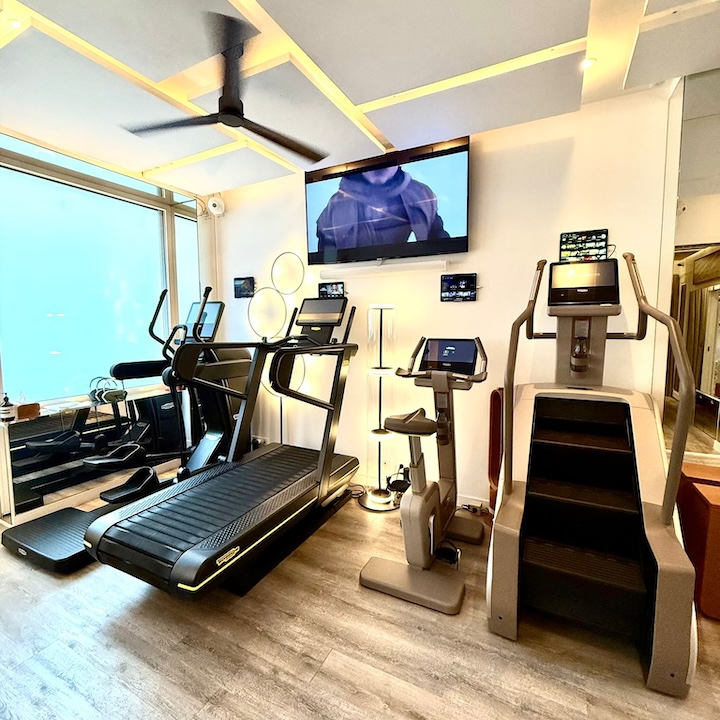
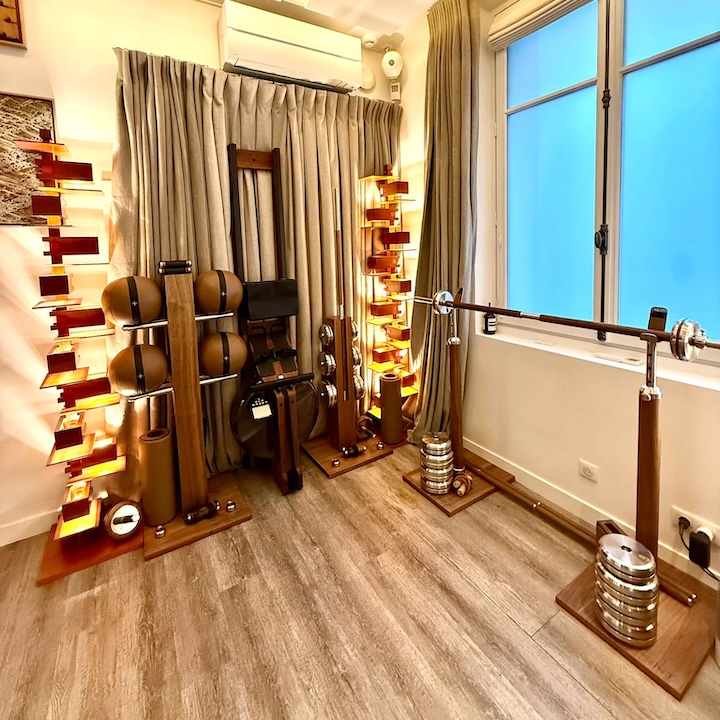
At the Louis Fabre Coaching studio in Neuilly-sur-Seine, the assessment is part ofa personalized evaluation conducted using a professional bioimpedance analyzer. The studio is open from 6 a.m. to 11 p.m., 7 days a week: you can choose a time slot before or after work. For coaching packages, visit the Services page or contact us.
Frequently Asked Questions
Is a body composition assessment reliable?
It is reliable for tracking a trend when using the same device and under the same conditions. For an individual alone, a single day's reading may differ from the actual weight by several kilograms, depending on the method used.
Can you do this at home with a smart scale?
These scales use bioimpedance. They can show changes over time if you always take measurements under the same conditions (same time of day, same hydration level). Don't take today's reading too literally.
Do you have to be on an empty stomach?
The ESPEN guidelines recommend fasting—no alcohol or exercise—for 48 hours under standard conditions. In everyday practice, however, it’s not necessary to be that strict. Follow your coach’s instructions.
How often should you get a body composition assessment?
At Louis Fabre Coaching, we use the same equipment every 3 months to track long-term progress.
Is this helpful if I just want to get in shape?
Yes. It provides an objective starting point and lets you see progress even when your weight doesn't change.
To learn more: sports coaching in Paris, the first session, or contact me. This content is for informational purposes only: it is not a substitute for medical advice.
Sources
- World Health Organization, Obesity and Overweight (fact sheet). https://www.who.int/news-room/fact-sheets/detail/obesity-and-overweight
- Comparison of Body Composition Assessment by DXA and BIA According to Body Mass Index: A Retrospective Study of 3,655 Measurements, PLOS ONE, 2018. https://journals.plos.org/plosone/article?id=10.1371/journal.pone.0200465
- Kyle UG et al., “Bioelectrical Impedance Analysis—Part II: Utilization in Clinical Practice,” ESPEN Guidelines, Clinical Nutrition, 2004. https://espen.org/documents/BIA2.pdf
- eBIODY, Biody Xpert ZM 3 product sheet, professional impedance meter. https://www.ebody.solutions/products/biody-xpert-zm-iii-impedancemetre-professionnel-nouvelle-generation
About the Author: Louis Fabre is a former tennis player (Roland Garros, NCAA Division I at Texas Tech) who holds dual master’s degrees in physical training and sports nutrition, with over 10 years of coaching experience and more than 2,000 clients.