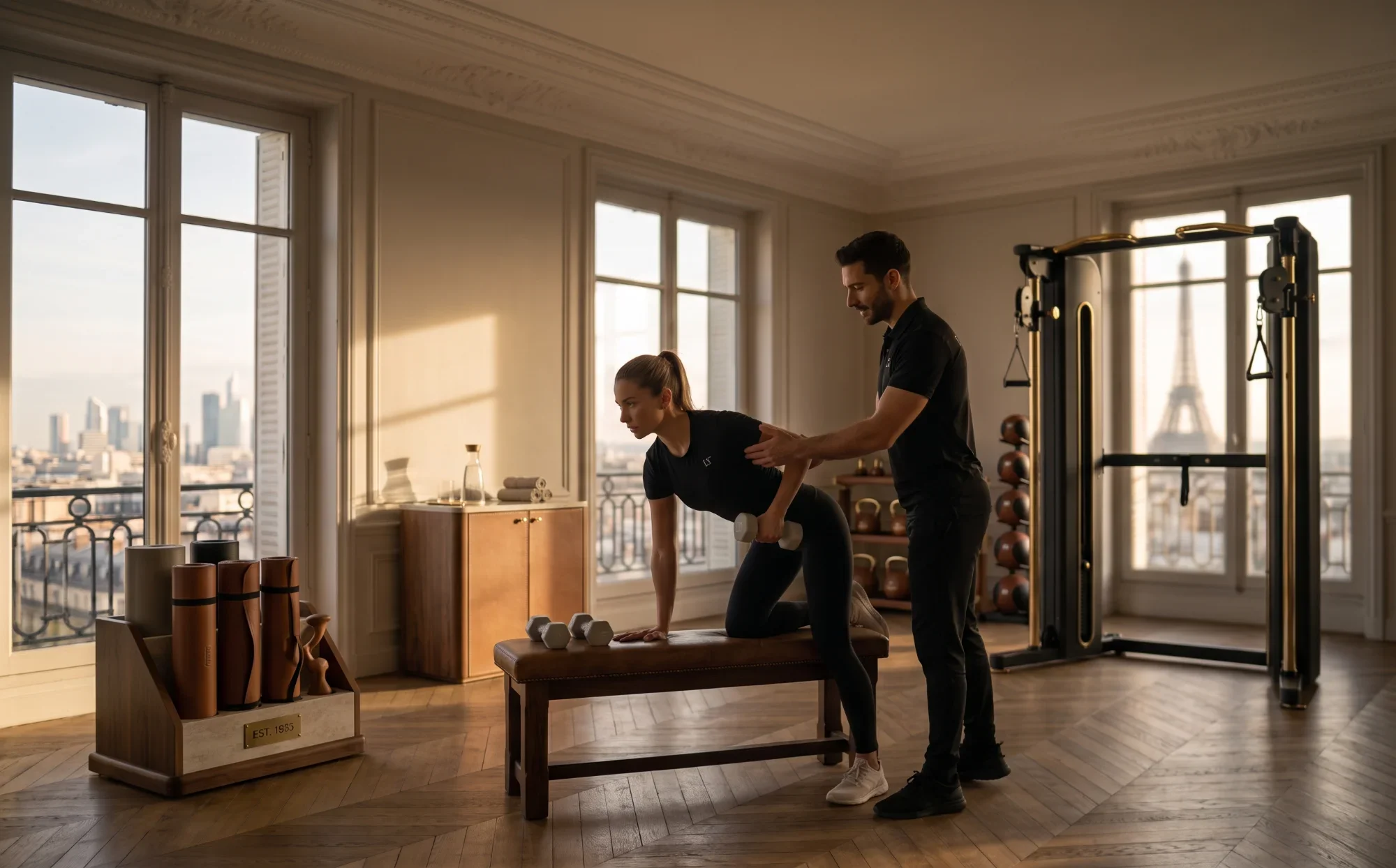
To get off to a good start with a personal trainer as a woman in Paris, you need three things: a clear goal, an initial assessment (body composition, posture), and a sustainable routine—usually two sessions per week that include strength training. The official recommendations are the same for adult women and men: at least two strength-training sessions per week, in addition to endurance activity.
In a nutshell
- Step 1: Choose a simple, measurable goal.
- Step 2: Conduct an initial assessment with the coach.
- Step 3: Start with two sessions per week, including strength training.
- The WHO guideline: at least 150 minutes of moderate-intensity physical activity per week, and muscle-strengthening activities at least 2 days per week.
- Pregnancy, postpartum, menopause, pain: Consult a doctor before starting.
Where should I start?
Getting started is easier than you might think. All it takes is five steps:
- Name your goal. Lose weight, boost your energy, get stronger, relieve back pain, or prepare for a deadline. Start with just one main goal.
- Take stock. An assessment looks at your current situation: athletic history, sleep, stress, body composition, and posture.
- Choose a pace you can stick to. It's better to do 2 regular sessions than 4 sessions that you give up on after a month.
- Learn the technique first. The first few weeks are for establishing proper form before increasing the weight.
- Measure more than just weight. Energy, strength, sleep, and ease of movement are all good indicators.
Should you do cardio or strength training?
Both have their place. The World Health Organization recommends that adults get at least 150 minutes of moderate-intensity physical activity per week, and do strength training at least 2 days a week. The new guidelines from the American College of Sports Medicine (ACSM, 2026) are along the same lines: exercise all major muscle groups at least twice a week. They do not distinguish between women and men.
His conclusion is a good place to start: the best program is the one you'll actually stick to. You don't need any complicated equipment to get started.
Many women are reluctant to lift weights for fear of “bulking up.” Our guide to building muscle without bulking up addresses this concern.
How many sessions per week should I start with?
For most goals, 2 to 3 sessions per week are sufficient. With a coach, this often involves 1 to 2 supervised sessions, supplemented by independent exercise. Details by goal can be found in our article on the number of weekly sessions with a coach.
"Coach" or "coache": Which should you choose?
Some women prefer a female coach, while others don't think it matters at all. It's a personal choice: discuss it before your first session. Other factors are just as important:
- a thorough initial assessment;
- a coach who explains what he does and why;
- an environment where you feel comfortable;
- schedules that work with your calendar;
- Tracking your progress—not just one session after another.
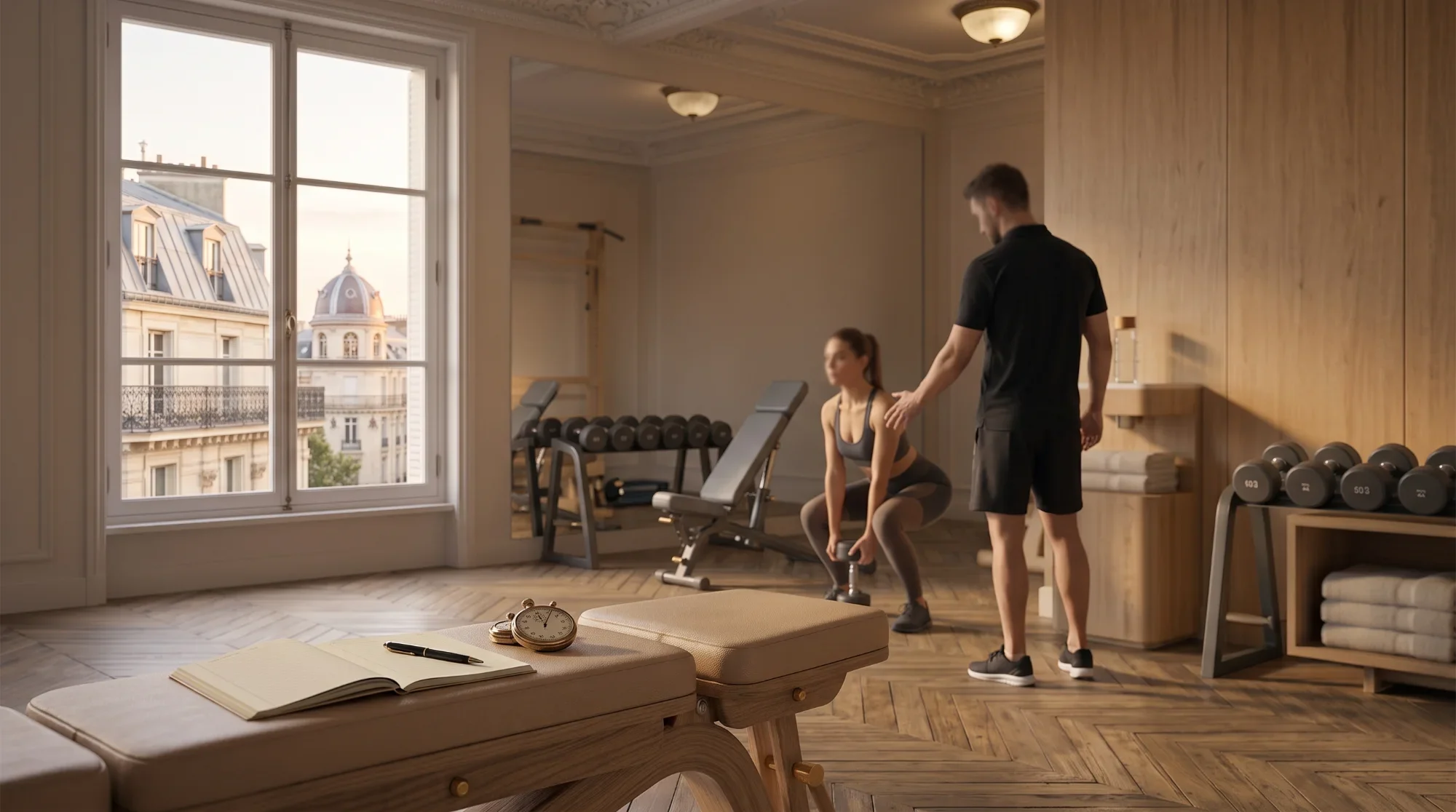
For now, Louis is the one who accompanies all the female clients to the studio.
What is the first session like?
The first session is a chance to get to know each other and lay the groundwork: your goals, your background, and your current fitness level. Our article on the first session with a personal trainer in Paris explains the process in detail. At the studio,the personalized assessment lasts 60 minutes: an interview, body composition analysis, posture evaluation, and then a personalized plan.
What should you do if you're pregnant, in the postpartum period, going through menopause, or experiencing pain?
First, consult a doctor. Physical activity is generally beneficial, and the WHO lists among its benefits during pregnancy and after childbirth a reduced risk of preeclampsia, gestational hypertension, and gestational diabetes. However, your workout routine should be tailored to your individual situation.
A meta-analysis of 49 studies (3,360 participants) conducted after menopause concluded that exercise improves bone density. The best results are achieved by combining endurance training and strength training. The authors note, however, that the intensity and frequency of exercise were not well described in the studies; therefore, these findings should be interpreted with caution.
If you have persistent pain, an injury, or an illness, talk to your doctor before you begin.
How can you stay organized in Paris with a busy schedule?
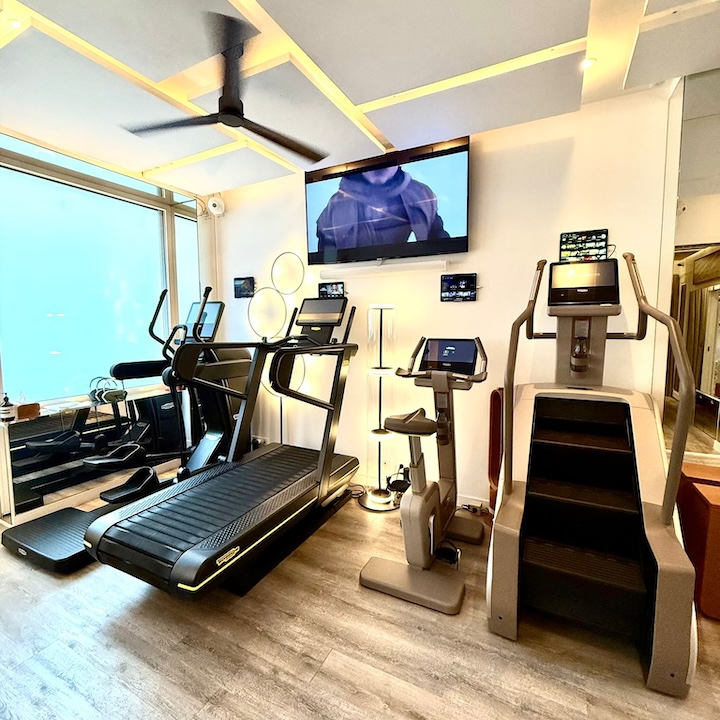
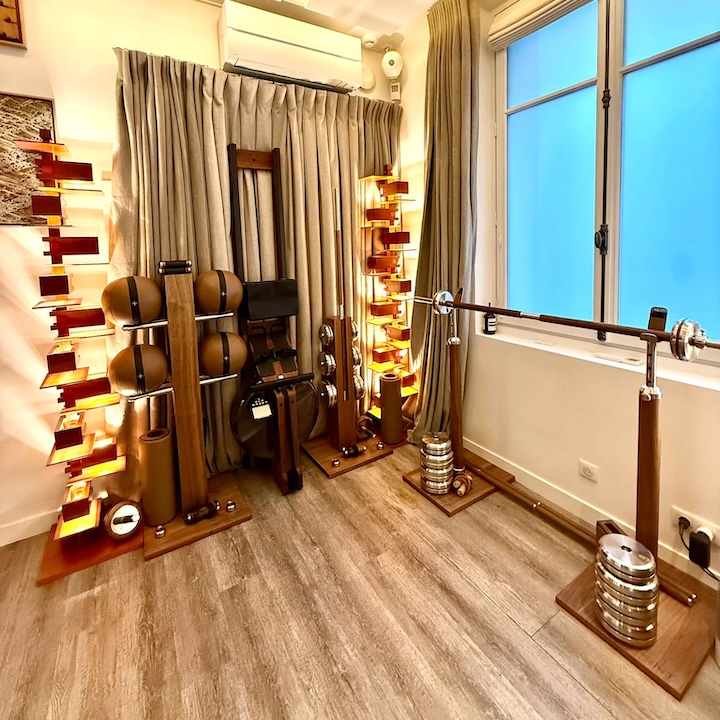
The studio in Neuilly-sur-Seine is open from 6 a.m. to 11 p.m., 7 days a week. You can come before work, at lunchtime, or in the evening. To learn more about personal training in Paris, visit our Personal Trainer in Paris page. If you’re over 40, our Fitness Guide for People Over 40 provides tailored advice. For training programs, visit the Services page.
How do I get started?
Book a 60-minute personalized assessment. You'll leave with a clear roadmap. Have a question first? Contact us.
Frequently Asked Questions
Where do you start if you've never played sports before?
Start with an initial assessment, a simple goal, and two sessions a week. The first few weeks are for learning the movements, not for breaking records.
Will I gain muscle mass by lifting weights?
This is a common concern, and it’s based on a misunderstanding. Our guide to building muscle without gaining bulk explains why.
How many sessions per week are needed?
Two to three sessions per week are enough for most goals. With a coach, one to two guided sessions, plus one session on your own.
Can I exercise while pregnant or after giving birth?
Often, yes, but first ask your doctor or midwife for advice, and then work with your trainer to adjust your workout.
Should you choose a female coach?
It's not required. The important thing is to feel comfortable and to have proper follow-up. Talk about it before you start.
To learn more: sports coaching in Paris, executive coaching, or contact me. This content is for informational purposes only and is not a substitute for medical advice.
Sources
- World Health Organization, Physical Activity (Fact Sheet). https://www.who.int/news-room/fact-sheets/detail/physical-activity
- Bull FC et al., “World Health Organization 2020 Guidelines on Physical Activity and Sedentary Behavior,” British Journal of Sports Medicine, 2020. https://bjsm.bmj.com/content/54/24/1451
- American College of Sports Medicine, Position Statement 2026: Resistance Training Prescription for Muscle Function, Hypertrophy, and Physical Performance in Healthy Adults. https://acsm.org/resistance-training-guidelines-update-2026/
- Effect of Different Types of Exercise on Bone Mineral Density in Postmenopausal Women: A Systematic Review and Network Meta-Analysis, Scientific Reports, 2025. https://www.nature.com/articles/s41598-025-94510-3
About the Author: Louis Fabre is a former tennis player (Roland Garros, NCAA Division I at Texas Tech) who holds dual master’s degrees in physical training and sports nutrition, with over 10 years of coaching experience and more than 2,000 clients.