A private tennis lesson in London typically costs between £30 and £60 per hour, according to the range provided by the LTA, the British tennis federation. The price depends on the coach, the neighborhood, and the court. To make the right choice, check three things: the coach’s LTA accreditation, what’s included in the price (whether the court is included or not), and where the lesson will take place. Here’s how to go about it, step by step.
My name is Louis Fabre. I coach executives, business leaders, and athletes in Paris, London, and Singapore, and I understand what a player with limited time who wants to make real progress needs. This guide is for you if you live in London, are an expat there, or visit regularly, and are looking for a coach to help you play better, get back into the game, or start playing.
Table of Contents
- What Is a Private Tennis Lesson Like in London?
- How much does a private tennis lesson cost in London?
- What Qualifications Should You Look for in a Coach?
- Which courts and venues to choose
- Tailor the course to your level
- Physical conditioning: a blind spot for many players
- Perspective: Why We Combine Tennis and Physical Training
- Track Your Progress and Choose How Often
- Our Private Tennis Lessons
- How to Book Without Making a Mistake: The Five-Step Method
- Frequently Asked Questions
- Sources
What Is a Private Tennis Lesson Like in London?
A session usually lasts one hour and takes place on a court reserved for you and your coach. The format is simple: warm-up, targeted technical drills, game-like scenarios, and then a review of what was worked on.
A good private lesson follows a clear structure:
- Dynamic warm-up (about 10 minutes). Mobility exercises for the shoulders, hips, and ankles, followed by a gradual increase in intensity. This is the difference between starting “cold” and starting ready.
- Technical session (about 20 minutes). One topic per session: serve, forehand, backhand, volley, or footwork.
- Skill drills (about 20 minutes). Game situations, drills under pressure, tactical plays.
- Feedback and debrief (5 to 10 minutes). The coach summarizes the key points and gives you one area to work on on your own.
Private lessons are for everyone: from adult beginners who want to avoid picking up bad habits, to club players struggling with their serve, to executives who only have time early in the morning or in the evening. Lessons can be one-on-one, or with two or three people. The price per person goes down in that case, and the coach keeps an eye on everyone.
The profile of the players who benefit the most
In my practice, three types of students make rapid progress in one-on-one lessons:
- Returning players who played when they were younger and want to get back into the swing of things without getting injured.
- Players in the tournament, whether ranked or unranked, whose progress is blocked by a specific technical issue.
- Busy professionals for whom the consistency of a fixed time slot is just as important as the content.
How much does a private tennis lesson cost in London?
The LTA reports that most private lessons cost between £30 and £60 per hour, with lessons for two or three people being slightly less expensive per person, and rates generally lower outside major cities. More highly qualified or in-demand coaches, particularly in the most sought-after neighborhoods in the center and west, tend to charge toward the upper end of this range, or even higher.
| Format | Price Guide for London | To be verified |
|---|---|---|
| One-on-one lesson with an independent coach | £30 to £60 per hour | Included or billed separately |
| Game for two or three players | Lowest price per person | Maximum number of players |
| Court rental only (municipal park) | Starting at £3 per hour during off-peak hours in certain boroughs | Peak-hour rate, lighting |
| Bundle of Multiple Lessons | Often on a sliding scale | Validity Period |
Does the price include the court?
That’s the first question to ask. With some providers, the lesson fee includes hourly court rental, sometimes with an additional charge for lighting depending on the time of day. With others, the coach charges by the hour and you pay for the court separately. For park courts, reservations are usually made through ClubSpark, the LTA’s platform, and rates can start at £3 per hour during off-peak hours in some boroughs, with significant variations from one borough to another.
A lesson advertised at £40, with a £12 court fee at your expense, therefore comes to £52. Always compare the total cost per hour, not the listed price.

What Qualifications Should You Look for in a Coach?
In London, there is a wide range of options: clubs, tennis park operators, and independent coaches. The quality varies. The most reliable indicator is LTA accreditation.
According to the LTA guide on the relationship between clubs and coaches, an “Accredited” coach holds a recognized certification, has liability insurance, has up-to-date first-aid training, and has completed safeguarding training. “Accredited+” coaches also commit to 15 hours of continuing education per year. Level 3 is the basic qualification for fully certified coaches.
Qualification Levels
The LTA outlines a five-level progression: Level 1 (assistant), Level 2 (instructor), Level 3 (coach), Level 4 (senior coach), and Level 5 (technical and performance management). For an adult looking to improve, an accredited Level 3 certification is a good starting point. Level 4 is particularly relevant if you’re aiming for competitive goals and advanced tactical work.
To qualify for Level 3, the LTA requires Level 2 or equivalent, LTA accreditation or an enhanced DBS check, as well as a minimum level of playing ability. It is therefore not a certification that can be obtained without a genuine level of playing experience.
Where exactly should you check?
The LTA’s “Find a Coach” directory lists the organization’s coaches. On each profile page, the LTA encourages users to review the coach’s qualifications, experience, and continuing education—which can be viewed in the “Recently Completed Training” tab, as shown on this accredited coach’s profile. It takes just five minutes to review a profile before booking.
Beyond the paper itself, three criteria matter:
- Experience based on your profile: adult beginner, experienced player, returning to play after an injury.
- The ability to explain: A good coach gives one instruction, not ten.
- Consistency: same coach, same time slot, steady progress.
Which courts and venues to choose
London has more than 1,000 outdoor courts spread across parks, clubs, and private estates, according to a guide to the capital’s tennis courts. Your choice of location will determine the comfort, cost, and consistency of your sessions.
| Type of venue | Benefits | Constraints |
|---|---|---|
| Municipal Park Court | Low prices, online booking, many neighborhoods | Weather, limited lighting, crowds on weekends |
| Club Court | Well-maintained surfaces, atmosphere, sometimes indoors | Membership or invitation, depending on the club |
| Indoor Center | Play all year round, even in the rain | Higher hourly rate |
| Private or residential courtyard | Discretion, flexible hours | Limited access, network of contacts |
For working people, proximity is key. A court that’s ten minutes from the office or home will be used consistently over time, while an “ideal” court that’s forty minutes away will be abandoned after three weeks. If you play between October and March, make sure to find an indoor or floodlit court: in London, it gets dark as early as 4 p.m. in the middle of winter.
Tailor the course to your level
Private lessons have one key advantage: the content is tailored to you, not to the group.
Beginner. We focus on racket grip, balance, footwork, and a consistent stroke rhythm. The goal of the first few sessions is to sustain a rally of a few balls, not to hit the ball hard.
Intermediate. We work on correcting a specific weakness (short backhand, imprecise serve) and develop simple game strategies: hitting deep, varying the height of shots, and opening up the court.
Confirmed. We're working on tactics, reading the opponent's game, managing key moments, and specific physical conditioning: speed of movement, footwork, and explosiveness.
During the first session, the coach should ask you questions about how long you’ve been playing, past injuries, your goals (recreational, interclub tournaments, fitness), and your availability. A session that begins without any such discussion isn’t truly personalized.
Physical conditioning: a blind spot for many players
Tennis involves explosive movements that engage the shoulders, hips, core, and ankles, with constant changes in direction. An adult player who hasn’t prepared physically will quickly feel the effects: tension in the shoulder when serving, a stiff back after an hour, and tired knees.
A few simple habits can make a big difference:
- An 8- to 10-minute dynamic warm-up before each session.
- One strength-training session per week, focusing on the core, legs, and shoulders.
- Exercises to improve mobility in the hips and thoracic spine.
- Adequate sleep and hydration on game days.
If you have persistent pain in your shoulder, elbow, or knee, consult a doctor or physical therapist before increasing the intensity of your workout.
Perspective: Why We Combine Tennis and Physical Training
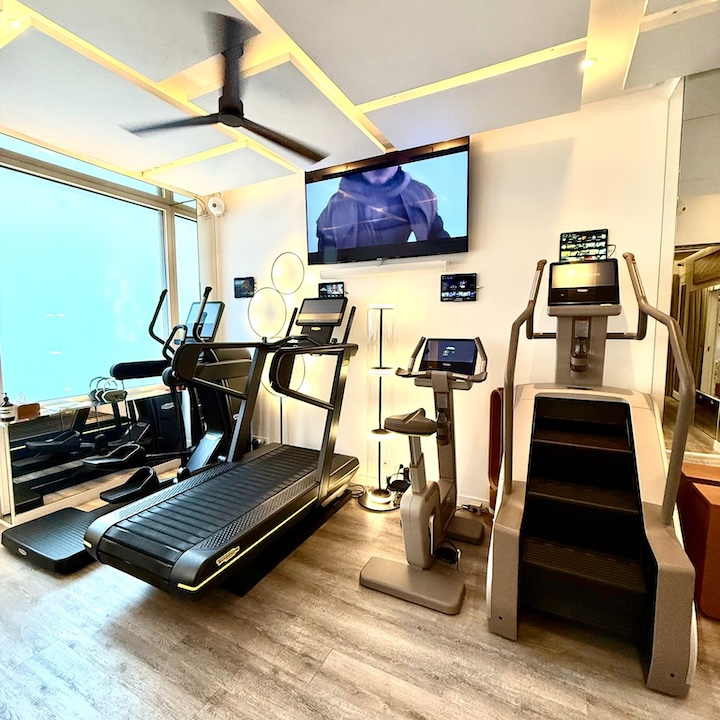
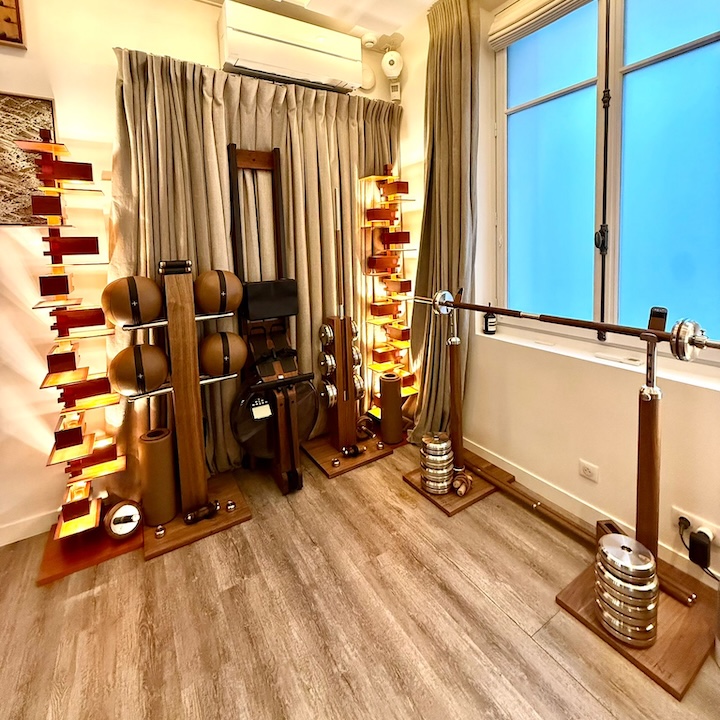
In our practice, we view tennis as a sport where technique alone isn’t enough. A player might spend months working on their serve and still hit a plateau because their shoulder lacks mobility or their legs tire out in the third set. That’s why each of our sessions is tailored in real time to the client’s skill level, lifestyle, and physical needs.
We advocate a holistic approach: movement, body, and mind all work together. Nutritional strategy and mental coaching are integral to our support system, because scoring a key point is also a matter of mindset and available energy.
With over ten years of expertise and a practice spanning Paris, London, and Singapore, we understand what executives and demanding athletes require: precision, exclusivity, and genuine personalized attention. A private tennis lesson is most valuable when it’s part of a plan for long-term improvement, not just a series of isolated sessions.
Track Your Progress and Choose How Often
Progress is something you measure—not something you guess at. Here are some concrete benchmarks to set with your coach right from the start:
- A specific goal: to sustain a ten-shot rally, improve my first-serve percentage, and play in an interclub tournament.
- A starting point: an observation session during which the coach notes your strengths and weaknesses.
- An assessment every 6 to 8 sessions: compare it to the starting point and adjust the program.
- Off-court training: an exercise to do on your own between sessions.
One session a week or two?
One session a week is enough for a beginner or a very busy player: it gives the body time to adapt. Two sessions a week significantly speed up progress, especially if one is devoted to technique and the other to game play or physical conditioning. Beyond that, make sure to prioritize recovery: sleep, stretching, massage, and rest days.
A package of multiple sessions helps you stay on track: you book them, you commit, and you make progress. It also prevents the “I’ll see next week” mindset that ruins most good intentions.
Our Private Tennis Lessons
We offer private tennis lessons for €200 per hour, in keeping with the philosophy that defines our entire approach: personalized sessions, precise coaching, nutritional advice, and mental coaching if you’d like. You can find more details on our private tennis lessons page.

If you’re also looking to strengthen your body to improve your game, our personal training at €170 per hour and our personalized assessment at €140 per hour are a great place to start. To spread out your training over time, we also offer packages of 10, 20, and 30 sessions, which are detailed on our services page. To learn more about how we work in London, visit our sports coaching page in London.
How to Book Without Making a Mistake: The Five-Step Method
- Set your total budget per hour, including the short one.
- Choose a neighborhood near your home or office.
- Check the coach's LTA certification and continuing education.
- State your goal in your first message: recovery, technique, competition, or fitness.
- Plan a series of 6 to 8 sessions, with a written evaluation at the end.
Also plan for practical considerations: a cancellation policy in case of rain, a notice period, and the availability of an alternative or covered court in the winter. These details matter more than you might think over the long term.
Frequently Asked Questions
Do you have to be a club member to take private lessons in London?
No, not always. Many public courts can be reserved online by the hour through the LTA’s ClubSpark platform, without a membership. Private clubs, on the other hand, often require a membership or an invitation, so be sure to check before booking.
What level of certification should you look for in a coach?
Choose an LTA-accredited coach, ideally Level 3 or higher. Accreditation requires a recognized qualification, insurance, up-to-date first aid certification, and safeguarding training. You can view their profile in the LTA’s “Find a Coach” directory.
Can an adult beginner make progress with private lessons?
Yes, it’s actually a great format: the coach tailors the pace, exercises, and vocabulary to your needs. The first few sessions focus on grip, balance, and consistency in your strokes. Plan on a series of 6 to 8 sessions before your first real assessment.
How often should I take classes?
One session per week is sufficient for long-term learning even with a busy schedule. Two sessions will speed up your progress if you recover well. If you're working with a coach, schedule a review every 6 to 8 sessions.
What should we do if it rains?
When you make your reservation, ask about the policy in case of rain: rescheduling, an indoor court, or a substitute fitness session. In winter, an indoor or floodlit court helps avoid repeated cancellations.
Sources
- LTA, Find a tennis and padel coach
- LTA, Guide to Club-Coach Relationships (June 2024)
- LTA, Coach Certifications
- LTA, Tennis Coach Certification (Level 3)
- LTA, Profile of an Accredited Coach
- The Cheapest Tennis Courts in London
- Guide to London's Outdoor Courts
Recommendations