Managing your emotions better doesn’t mean suppressing them. It means recognizing them early, identifying them precisely, accepting them, and then choosing how to respond rather than simply reacting to them. This can be learned like a physical skill: through short, repeated movements, starting with the body. In this article, I’ll share the method I teach my clients, techniques for when tension rises, and how regular movement supports all of this.
Table of Contents
- Start with the body: recognize the emotion before it gets out of hand
- Accurately Identifying Your Emotions
- Embrace your emotions rather than fight them
- What to Do When Emotions Are Already Running High
- Sports: A Direct Contributor to Your Emotional Balance
- Emotions and Athletic Performance: What the Field Teaches Us
- Our Perspective as Coaches
- Tailored support in Paris
- When to Seek Professional Help
- A Seven-Day Plan to Get Started
- Frequently Asked Questions
- Sources
Start with the body: recognize the emotion before it gets out of hand
An emotion first manifests itself in the body, long before you can find the right words. A tight throat, clenched jaws, raised shoulders, a knot in your stomach—these are the first signs. Learning to recognize them is the foundation for everything else.
The Todopsy website suggests a very practical exercise: three times a day, at set times, check your breathing and the tension in your shoulders, jaw, and stomach. Within a few days, you’ll start to recognize your own personal warning signs—the ones that precede your irritation, anxiety, or nervous exhaustion.
Why a set time? Because regular check-ins—outside of times of crisis—help maintain focus. That’s exactly what I do during a session with a dynamic warm-up: we assess the body’s condition before asking for an effort. Starting “cold” or starting ready—that’s where the difference lies.
Why Early Detection Makes All the Difference
*Mental Awakening* explains that the same technique may seem ineffective when emotional arousal is very strong, and very effective when you are calm: the prefrontal cortex, which is responsible for thinking, is partly engaged by the emotional response itself. The rule of thumb, therefore, is to act as soon as you notice the early warning signs—slight muscle tension, a slightly faster heartbeat, or a thought going round and round in your head—rather than waiting until the emotion has peaked.
Accurately Identifying Your Emotions
Once the signal has been identified, the next step is to put a name to it. Santé publique France describes this process as follows: identifying one’s emotions involves consciously directing one’s attention toward one’s internal states, observing the present experience without altering or interpreting it, and then matching that feeling to an appropriate category—this is known as emotional labeling.
Specifically, here is the order I recommend, based on the method detailed by Todopsy:
- The physical signal: Where do you feel it?
- The context: When and under what circumstances?
- The family of emotions: fear, anger, sadness, joy, disgust, or surprise.
- The exact term: annoyed, disappointed, worried, overwhelmed, ashamed?
- Intensity: a rating from 0 to 10.
- The need: What do you need right now (rest, clarity, support, boundaries)?
- The written record: three lines, no more.
This website emphasizes that order matters: skipping a step throws off the ones that follow. It also reminds us that we can feel two emotions at once—for example, joy and anxiety before starting a new job. Accepting these mixed feelings prevents us from thinking that we’re “feeling wrong.”
What Naming Changes in the Brain
According to Éditions Larousse, putting one’s feelings into words has a beneficial effect on amygdala activity, and the more one resists an unpleasant emotion, the longer it persists. Labeling is also an accessible technique: *L’Éveil Mental* notes that one can name the emotion aloud or in writing, even when highly aroused.
This is not a minor detail. Recognizing one’s emotions has measurable effects on daily life: Mental Health Info Service notes that it reduces stress, improves relationships by fostering empathy, and helps prevent mental health disorders, whereas suppressing one’s emotions can increase the risk of depressive and anxiety symptoms.
Embrace your emotions rather than fight them
The most common reaction is to push away whatever is bothering us. Yet acceptance is the phase that allows regulation to “take effect.” Here is a short sequence to practice while seated, taking two or three minutes.
- Ground yourself in the present: breathe, sit up straight, and take a moment to be alone in a quiet place.
- Observing yourself: Close your eyes and watch your thoughts pass by without judgment. Larousse suggests silently repeating a phrase of acceptance, such as “I accept you and grant you the right to be just as you are.”
- Describe: Say aloud what your body is feeling and rate the intensity on a scale of 0 to 10.
Laval University makes a helpful point: breathing doesn’t make the emotion go away; it serves as an anchor in the midst of the storm. So you don’t have to “succeed” at calming yourself down—you’re simply trying to stay present so you can make a choice.
Understanding what triggered it
Once the emotion has been acknowledged, the question of the trigger arises.The ATCDO, an association of cognitive-behavioral therapists, emphasizes that it is often our interpretations of a situation—rather than the facts themselves—that trigger distressing emotions. Asking yourself, “What was I telling myself at that moment?” is therefore more productive than asking, “Why do I feel this way?”
To explore this further, TCD Montréal describes an emotion as a chain of nine elements: triggering event, awareness, interpretation, physical response, feeling, expression, urge to act, actual action, and consequences. This framework helps you see that between the urge to act and the action itself, there is a space where you can intervene.

What to Do When Emotions Are Already Running High
Sometimes, this approach comes too late: anger has already flared up, and panic is setting in. There are steps you can take in these moments, but the key is still to slow down before making a decision.
Laval University outlines four steps for its toolkit:
- Slow down by connecting with your surroundings: five things you see, five sounds you hear, five things you touch.
- Breathe calmly.
- Embrace and observe: breathe through your emotions, create space, and observe your thoughts without dwelling on them.
- Understanding and choosing: identifying what triggered the situation, recognizing one’s repetitive behaviors, and choosing a response consistent with one’s values.
Other simple strategies recommended by Mental Health Info Service include: writing down your feelings, focusing on the positive, practicing relaxation techniques, getting moving and getting some fresh air (exercise, a walk, stretching), and talking with others.
If the situation becomes dangerous
An intense emotional crisis may require immediate help. According to sante.fr, in the event of serious and immediate danger, call 15 (SAMU), 18 (fire department), or 17 (police, gendarmerie). 3114 is the national suicide prevention hotline; it is toll-free, available 24 hours a day, 7 days a week, and staffed by trained professionals. 112 works throughout the European Union.
Sports: A Direct Contributor to Your Emotional Balance
This is the core of my work, and what my clients often ask me: How does movement help us better navigate our emotions? Official sources are clear on the principle.
According to info.gouv.fr, regular physical activity can reduce symptoms of depression and anxiety. Exercise works in several ways: it triggers the release of endorphins, dopamine, and serotonin; it helps divert attention away from negative thoughts; it brings structure to daily life; and it helps rebuild self-esteem.
The Ministry of Sports’ guide on Mental Health and Physical Activity points in the same direction: reduced anxiety, improved well-being and self-confidence, protection against burnout, and better sleep. For its part , the ATCDO recommends paying attention to diet and sleep and engaging in regular physical activity, as exercise helps regulate mood.
On our blog, we discuss the benefits of sports for mental health and the hormonal effects of regular exercise.
Which activity for which emotion?
According to info.gouv.fr, each industry sector contributes something different:
| Activity | What it offers on an emotional level |
|---|---|
| Running, cycling (endurance) | Calms intrusive thoughts |
| Boxing, martial arts | Allows people to vent their frustrations in a structured way |
| Yoga, tai chi, swimming | Develops self-awareness through breathing, concentration, and listening to the body |
This chart is not a set of rules. It helps you choose based on how you’re feeling at the moment: a stressful day calls for boxing or cardio, while a period of mental overload calls for yoga or mobility exercises.
How often should you aim for this?
The Ministry of Sports’ guide recommends that adults engage in at least 30 minutes of moderate-intensity activity per day, 5 days a week, and do strength training, flexibility exercises, and balance exercises twice a week. Moderate intensity corresponds to a slight increase in heart rate and mild shortness of breath: you can still talk. At high intensity, talking becomes difficult.
For a busy schedule, here's how I'd translate it:
- two strength training or physical conditioning sessions, each lasting about one hour;
- three shorter sessions of moderate-intensity exercise (brisk walking, cycling, mobility exercises);
- A moment to breathe or do yoga—even just ten minutes—on days when you're feeling mentally overwhelmed.
Sleep: An Often-Overlooked Link
The French National Health Insurance Agency states that physical activity helps regulate the sleep-wake cycle: it helps you fall asleep faster, wake up less often, and get more deep, slow-wave sleep. It advises avoiding activities that are too strenuous or done too late in the evening. Quality sleep reduces emotional reactivity the next day, and we’ve dedicated a guide to sleep and performance.
Emotions and Athletic Performance: What the Field Teaches Us
Emotions don’t stop at the door of the gym. Before a competition, a marathon, or a return to training after an injury, the fear of performing poorly, frustration, or impatience can affect the quality of your movements. Applying the method described above changes your training: identify the physical cues during your warm-up, name the emotion, note its intensity, and then adjust the workload.
Returning to play after an injury is a good example, as it involves a mix of fear, impatience, and a loss of confidence. For soccer players, this guide on returning to soccer after an injury clearly illustrates how the physical and mental aspects of the sport are intertwined.

When it comes to how we perceive effort, our article on how a coach changes your perception of effort explains how an effort that seems insurmountable becomes manageable when your attention is focused in the right way. It’s the same mechanism that applies to strong emotions.
Our Perspective as Coaches
In our practice, we see the same thing every week: a client arrives tense, rushed, and with a lot on their mind, and a well-structured session changes their state before we even start talking. It’s not magic—it’s the body taking back control.
Our approach combines physical coaching, personalized nutrition strategies, and mental support. Each session is tailored in real time to the individual’s fitness level, lifestyle, and how they’re feeling that day. If you arrive feeling tired or irritable, we take that into account: we adjust the intensity, the choice of exercises, and the pace accordingly.
We believe that people are better able to manage their emotions when they have a consistent framework, a set schedule, a measured effort, and someone who observes them closely. A personal coach provides that consistency and attentive listening, which is why our clients—both executives and athletes—find it a source of support in their demanding lives.
Working with the body is not just a side note to emotional management—it is one of its most direct tools. We invite you to use it.
Tailored support in Paris
If you’d like to establish this routine with a personalized plan, we offer personal coaching for €170 per hour, with sessions tailored to your goals and lifestyle. To start with a detailed assessment of your current situation, we offera personalized evaluation for €140 per hour.
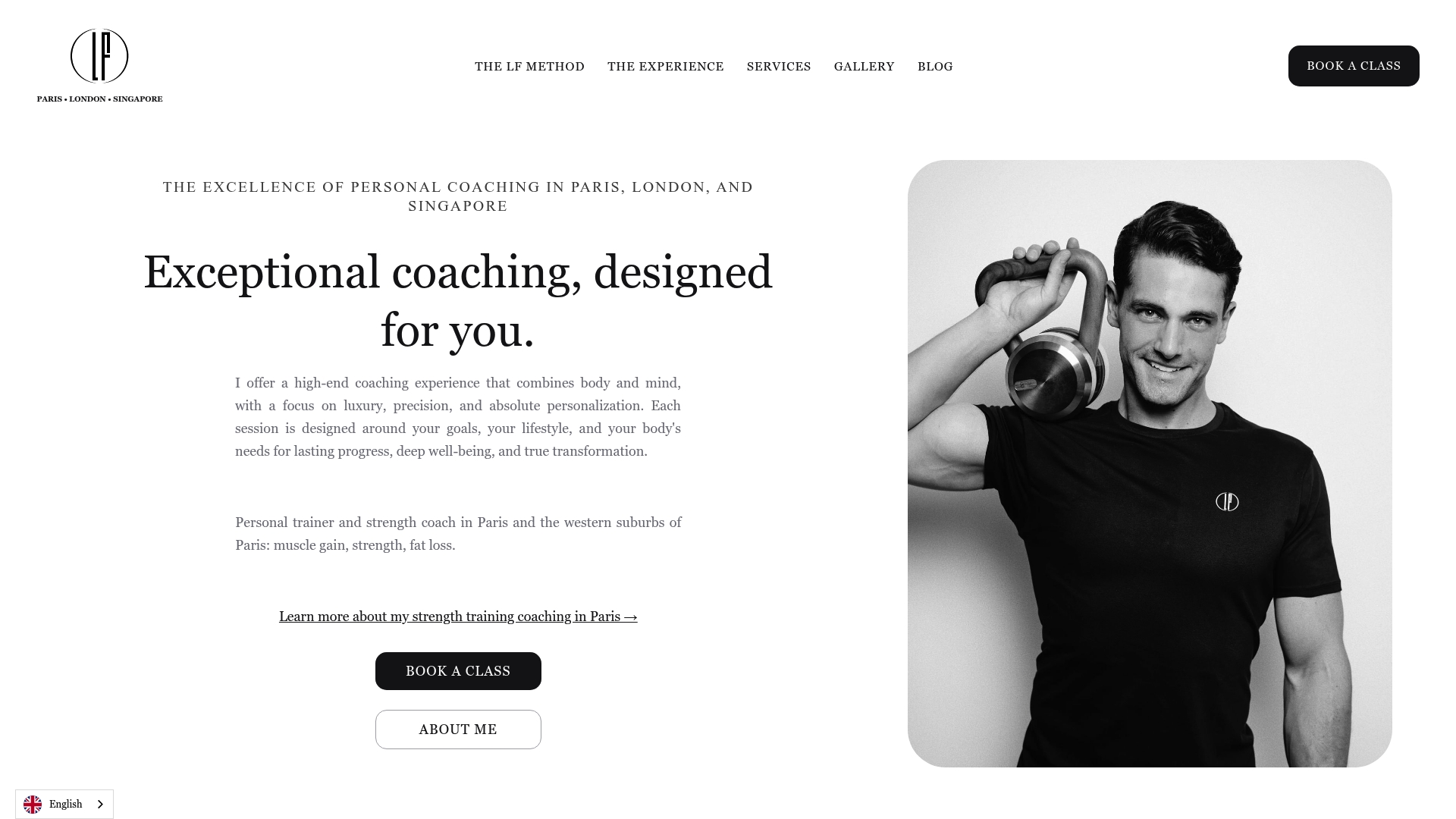
For a consistent workout routine, the 10-session package costs €1,550, and you can find all of our services—including in-home coaching—on our services page. We can also work with you to design a program that combines flexibility, strength training, and recovery time.
When to Seek Professional Help
The methods listed above are tools for everyday use. If your emotions are overwhelming you for an extended period, disrupting your sleep, work, or relationships, or if you feel you need psychological help, talk to your primary care physician. According to Santé publique France, your doctor can help you and, if necessary, refer you to mental health professionals. In an emergency, call 15 from a landline or 112 from a cell phone, or go to the emergency room at the nearest hospital if you’re experiencing acute psychological distress.
Exercise and physical training complement health care; they do not replace it. A coach knows how to work in line with your doctor’s recommendations.
A Seven-Day Plan to Get Started
To avoid sticking to theory, here's a typical week—one that's realistic even with a busy schedule.
- Days 1–3: Three body checks per day at set times (breathing, shoulders, jaw, stomach). Just write down what you notice.
- Days 4 and 5: For each significant episode, write three lines: the situation, the emotion identified, and the intensity on a scale of 0 to 10.
- Day 6: One 30-minute session of moderate-intensity physical activity. Note how you feel before and after.
- Day 7: Review your notes and identify the trigger that comes up most often, and then the underlying need.
After a week, you'll have a personalized chart of your signals, your triggers, and how the movement affects you. This is the foundation for deciding what you want to work on next.
Frequently Asked Questions
Is exercise enough to manage your emotions?
Exercise is a powerful tool: according to info.gouv.fr, it can reduce symptoms of anxiety and depression and help relieve stress. It works even better when combined with paying attention to your emotions—recognizing them, naming them, and understanding what triggers them. The two approaches reinforce each other.
What sport should you choose to release anger or frustration?
According to info.gouv.fr, boxing and martial arts provide a structured way to release frustrations. To calm recurring thoughts, endurance activities (running, cycling) are a good choice. Choose whatever you’d like to do again: consistency matters more than intensity.
How long does it take to learn to manage your emotions better?
There is no guaranteed timeframe; everyone progresses at their own pace. What is certain is that recognizing the body’s signals is something you can learn quickly—in just a few days of regular practice. The rest comes with repetition, just like any physical skill.
What should you do when you're in the middle of an anxiety or anger attack?
First, slow down: describe five things you see, five sounds, and five things you touch, then breathe calmly, as recommended byLaval University. If you are in danger or in serious distress, call 15, 112, or 3114.
Sources
- Todopsy: Recognizing and Naming Your Emotions
- Santé publique France: Identifying Your Emotions
- Mental Health Info Service: Recognizing and Naming Your Emotions
- Larousse Publishing: How to Embrace an Emotion
- Laval University: Understanding and Managing Your Emotions
- Laval University: Expanding Your Toolkit
- ATCDO: Emotional Regulation
- TCD Montreal: Observing and Describing Emotions
- Mental Awakening: Emotional Regulation Techniques
- sante.fr: Helplines
- info.gouv.fr: Taking Care of Your Mental Health
- Ministry of Sports: Mental Health and Physical Activity
- Ameli: Sports and Physical Activity—A Key to Well-Being
- Santé publique France: Finding Medical and Psychological Help
- MATCH11: Getting Back to Soccer After an Injury
Recommendations