To reduce muscle soreness, the most effective approach is to keep moving gently (walking, light cycling), apply heat, get a 20- to 30-minute massage within two hours of exercise, or take a brief dip in cold water, and resume training gradually. Stretching, on the other hand, does not make the pain go away. Here are the details, based on medical sources and my observations during sessions with my clients.
Table of Contents
- What Happens in the Muscle When You Have Sore Muscles
- How to Relieve Muscle Soreness: Evidence-Based Tips
- Does stretching reduce muscle soreness?
- Should you take ibuprofen for muscle soreness?
- Can you work out when you have muscle soreness?
- Prevent Muscle Soreness Before It Starts
- When to Seek Medical Attention
- Our Perspective as Coaches
- Support to help you make progress without experiencing muscle soreness
- Frequently Asked Questions
- Sources
What Happens in the Muscle When You Have Sore Muscles
Muscle soreness has nothing to do with lactic acid, a belief that is still very widespread. According to François Dernoncourt and Clément Naveilhan in The Conversation, it results from microtears in the sarcomeres, the contractile units of the muscle. These are followed by a cascade of reactions—including the release of enzymes and proteins, as well as inflammatory and immune responses—that lasts for several days.
The activities that cause the most strain are those that are intense or unusual, particularly eccentric contractions—that is, when the muscle slows down a load by lengthening: walking down stairs, lowering into a squat, or running uphill.
To set markers:
- Onset:The AFM Telethon estimates that muscle soreness occurs between 6 and 48 hours after exercise, while Doctissimo estimates it occurs between 12 and 48 hours.
- Peak pain: between 24 and 48 hours, according to Doctissimo.
- Duration: The muscle heals itself in a few days—about 5 days, according to Doctissimo.
This is a normal part of the healing process. Our goal, therefore, is not to “eliminate” muscle soreness at all costs, but to alleviate the discomfort and keep you active while it subsides.
How to Relieve Muscle Soreness: Evidence-Based Tips
A systematic review with meta-analysis by Dupuy et al. (2018), which included 99 studies, compared various recovery methods. Active recovery, massage, compression garments, water immersion, contrast therapy, and cryotherapy reduce the intensity of muscle soreness. The other methods tested showed no change.
Here's how I categorize them in practice, from the simplest to the most structured.
1. Keep moving, gently
Santé.fr recommends keeping sore muscles moving: light stretching, cycling, walking. Vidal, for his part, notes that muscle soreness goes away faster this way.
In practical terms:
- A 20- to 30-minute walk or bike ride at a leisurely pace, at an intensity where you can hold a conversation;
- a comfortable range of motion, without trying to “push” yourself to the point of pain;
- the day after the session, rather than the couch.
That's exactly what I recommend to a client who has just completed their first leg workout: the next day, an active walk is better than complete rest.
2. Heat
According to Vidal, a hot bath relaxes muscles and soothes pain, and Santé.fr recommends hot baths and heating pads. A hot shower for a few minutes on the affected area in the evening is the easiest option. We discuss the importance of these post-workout care routines in our article on showering and post-workout care.
If you're training in the summer, the approach to recovery changes a bit: learn how to recover properly when it's hot.
3. Massage
This is the technique that the meta-analysis by Dupuy et al. ranks as the most effective for reducing muscle soreness and perceived fatigue, with a significant effect lasting up to 96 hours after exercise. A 20- to 30-minute massage performed immediately or up to 2 hours after exercise reduces muscle soreness for 24 hours. Doctissimo provides the same recommendation: a massage lasting at least 20 minutes, up to 2 hours after exercise.

The key factor is timing. A massage within two hours of a workout is more beneficial than one two days later. That’s why we offer a recovery massage immediately following a workout, at €200 per hour.
Vidal also mentions over-the-counter remedies: massaging the painful area with products containing nonsteroidal anti-inflammatory drugs (NSAIDs) or salicylates, or camphor, eucalyptus, and menthol for their cooling effect. Ask your pharmacist for advice, especially if you are already taking medication.
4. Cold water, briefly
Healthcare professionals from*American Family Physician* (2025) report that cold-water immersion after high-intensity exercise can improve perceived recovery and reduce muscle soreness 24 hours later. Short immersions—lasting less than 10 to 15 minutes—at a temperature below 15 °C yield the most consistent benefits. Beyond 15 minutes, no additional positive effects are observed.

So the rule is: short and cool, not long and freezing. Prolonged exposure doesn't offer any additional benefits. If you have a heart or circulatory condition, talk to your doctor first.
5. Hydration, Sleep, Nutrition
The sources cited here don’t provide any spectacular statistics for these three factors, so I won’t promise you any specific results. They remain the foundation of any recovery: staying hydrated, getting enough sleep, and consuming enough protein and energy for your muscles to repair themselves. In our approach, the nutritional strategy is part of the support program, because it is tailored to your weight, your training load, and your lifestyle.
If you're looking for more ideas on how to relieve your legs after a strenuous workout, these post-run recovery tips are a great complement to the advice above.
Does stretching reduce muscle soreness?
That’s the question everyone asks, and the answer is surprising. The Cochrane Review (2022) concludes that stretching before and/or after exercise does not result in a clinically significant reduction in delayed-onset muscle soreness in healthy adults. The combined estimate shows a decrease of half a point on a scale of 100 one day after exercise for pre-exercise stretching, and one point for post-exercise stretching. This is negligible.
INSERM (July 2024) concurs: there is no evidence to support the claim that stretching has an anti-inflammatory—and therefore pain-relieving—effect. Stretching that is performed incorrectly or too intensely immediately after exercise can even exacerbate micro-injuries. However, stretching does help improve flexibility and range of motion.
My advice:
- Save your stretches for improving your flexibility—either in a dedicated session or at the end of your workout—and don't push yourself too hard;
- Don't count on it to make persistent muscle soreness go away;
- Opt for a dynamic warm-up before exercising: it’s the difference between starting “cold” and starting ready.
Should you take ibuprofen for muscle soreness?
Ibuprofen is a medication: it should be taken with the usual precautions. The patient information leaflet published by the ANSM indicates that it is intended for the short-term treatment of pain such as muscle aches. The usual dosage is one 400-mg tablet per dose, to be repeated if necessary after 6 hours, without exceeding 3 tablets per day, or 1,200 mg.
The Summary of Product Characteristics states that you should seek medical advice if the pain persists for more than five days. It also notes that a high dose (2,400 mg per day) may be associated with a slightly increased risk of arterial thrombotic events. If you have a history of cardiovascular, gastrointestinal, or kidney problems, or if you are taking other medications, consult your doctor or pharmacist before taking this medication.
A study by Krentz et al. (2008) followed individuals who were doing strength training for 6 weeks. A moderate dose of ibuprofen (400 mg per day) had no effect on muscle hypertrophy, strength, or muscle soreness compared to a placebo. Personally, I prefer to focus on recovery through the methods described above before turning to medication.
Can you work out when you have muscle soreness?
Yes, but with caution. Doctissimo notes that it is not necessary to stop all activity, but that you should avoid putting too much strain on an already injured muscle and opt for low-impact activities.
Here's how I handle this with my clients:
- Mild muscle soreness: a normal workout targeting other muscle groups, or a light cardio session.
- If a muscle group is particularly sore, focus on another part of the body—such as flexibility or core strength—and let that muscle group recover.
- Sharp, localized pain or discomfort that worsens with movement: stop what you’re doing— this isn’t just ordinary muscle soreness.
If you want to understand the difference between progression pain and a warning sign, our guide to managing muscle soreness with a coach goes into more detail.
Prevent Muscle Soreness Before It Starts
The best prevention is a gradual approach, as Dernoncourt and Naveilhan point out: if muscle soreness has already set in, no single solution has truly been proven to alleviate all the symptoms. Doctissimo adds that low-intensity eccentric exercises are the best way to prevent muscle soreness, as they allow the muscle to adapt to the stress.
In practice:
- Increase volume and load in small increments from one week to the next;
- Introduce the new movements (squats, lunges, jumps) using a light weight;
- Make sure to focus on dynamic warm-ups and joint mobility;
- Work on your muscular balance, which also helps prevent injuries: see our article on muscular balance and injury prevention.
When to Seek Medical Attention
Santé.fr recommends seeing a doctor in the following situations:
- muscle aches are accompanied by fever, cramps, or muscle tremors;
- The pain prevents any movement;
- they do not go away on their own after a few days;
- The pain began after starting a new course of treatment, specifically for high cholesterol.
In these cases, don't wait: a coach isn't there to make a diagnosis.
Our Perspective as Coaches
After more than ten years of coaching, I still see the same scenario play out: a motivated client has an intense workout, is in a lot of pain two days later, and concludes that they “worked hard” or, conversely, that they “pushed too hard.” In both cases, they’re misinterpreting the situation. Muscle soreness is not an indicator of a workout’s quality.
That’s why we tailor each session in real time: based on your fitness level, your lifestyle, how well you slept the night before, and your workload. An executive who sleeps four hours and an athlete training for a marathon don’t recover in the same way, and the intensity of each day’s workout must take that into account. That’s where personalized coaching makes all the difference: the program adapts to you.
Our approach combines mind and body: nutritional strategy, mental coaching, recovery massage, and a calm environment where we take the time to do things right. We believe that recovery is part of training, not something that comes afterward. Sustainable progress is built on regular, well-balanced sessions—not on muscle soreness that keeps you bedridden.
Support to help you make progress without experiencing muscle soreness
Whether you’re getting back into exercise, switching up your routine, or training for a specific goal, a coach can tailor your workout intensity for you and help you avoid any unpleasant surprises. Our personal training is available for €170 per hour, with each session adjusted in real time to your current condition.
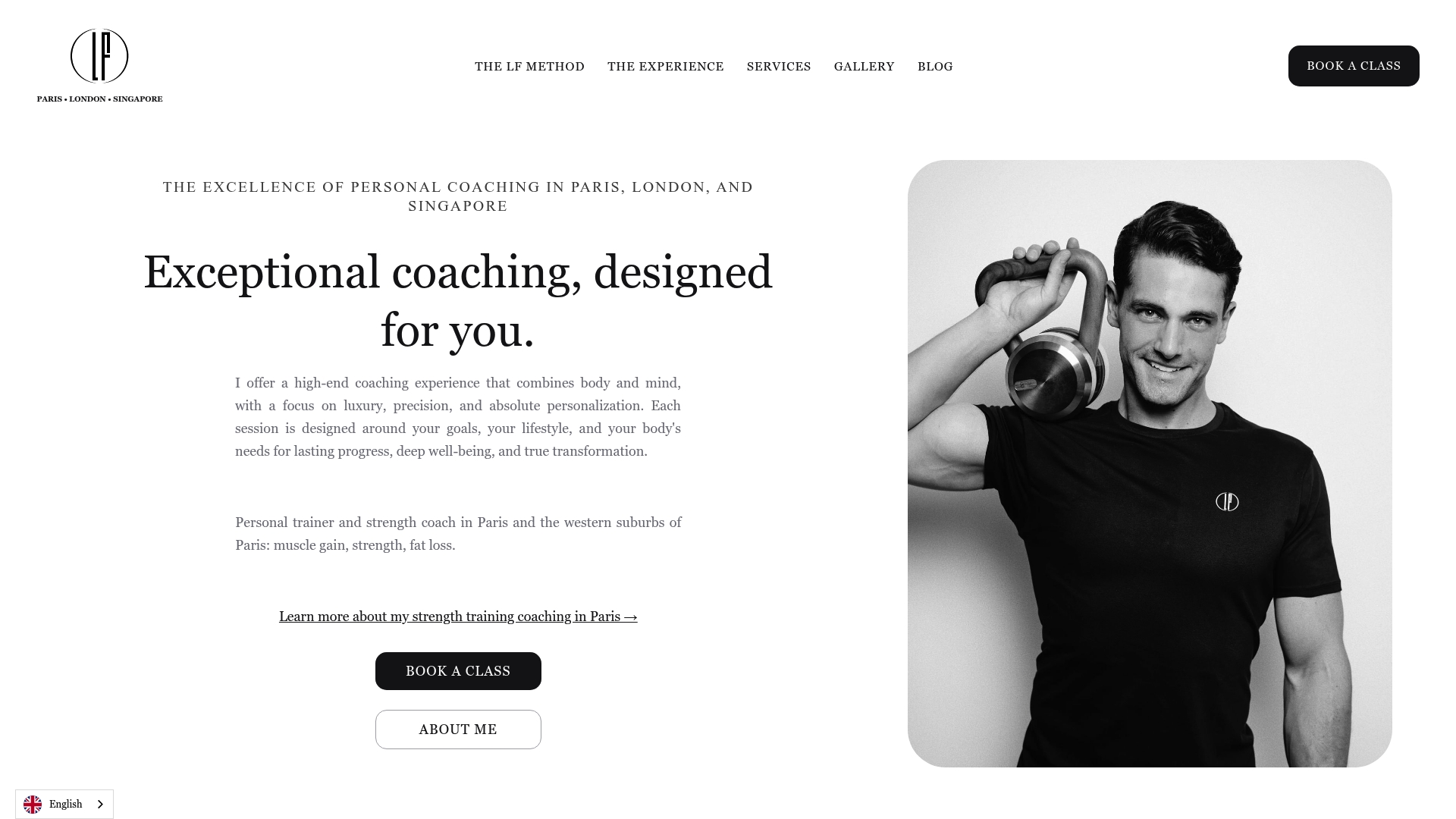
To start with a detailed assessment of your current situation,a personalized evaluation costs 140 € per hour. If you plan to come regularly, we also offer packages: 10 sessions for 1,550 €, 20 sessions for 3,000 €, or 30 sessions for 4,450 €. Find all our services, including recovery massage at 200 € per hour, on our services page.
Frequently Asked Questions
How long do muscle aches last?
They usually appear 12 to 48 hours after exercise, peak at 24 to 48 hours, and then subside within a few days—about 5 days, according to Doctissimo. If the pain persists beyond a few days, see a doctor.
Cold or hot: which should you choose?
Both have their place. A brief immersion in cold water (less than 15 minutes, at temperatures below 15 °C) has documented benefits after intense exercise. Heat, whether from a hot bath or shower, relaxes the muscles and soothes discomfort. Choose based on your comfort level and health.
Should you stretch to relieve muscle soreness?
It isn't helpful for that: the Cochrane review found no clinically significant reduction in pain. Stretching is still beneficial for flexibility and mobility; it should be done gently, not immediately after very intense exercise.
Can you exercise again when you have muscle soreness?
Yes, as long as you don't put too much strain on the injured muscle. Choose a low-impact activity such as walking, biking, or working out a different muscle group, and stop if the pain becomes sharp or localized.
Is ibuprofen appropriate?
According to the ANSM package insert, it is indicated for the short-term treatment of muscle aches, at a dose of 400 mg per dose, not to exceed 1,200 mg per day. Consult your pharmacist or doctor if you have a history of certain conditions or are taking other medications.
Sources
- Why Do We Get Sore Muscles After a Workout? (The Conversation)
- Muscle pain, soreness, cramps (AFM Telethon)
- Muscle Soreness: Is Relieving It a Good Sign? (Doctissimo)
- Muscle Pain: Cramps and Soreness (Santé.fr)
- What Should You Do If You Have Sore Muscles or Cramps? (Vidal)
- Dupuy et al., meta-analysis on post-exercise recovery (2018)
- Cold Water Immersion for Muscle Soreness (American Family Physician, 2025)
- Stretching to Prevent or Reduce Muscle Pain (Cochrane, 2022)
- Does Stretching Really Help Relieve Muscle Soreness? (INSERM, 2024)
- Ibuprofen Patient Information Leaflet (ANSM)
- Summary of Product Characteristics for Ibuprofen (ANSM)
- Krentz et al., Ibuprofen and Muscle Hypertrophy (2008)
- Recovery After a Run: Recovery Tips
Recommendations